
To prepare our homes for a thunderstorm, we should unplug electronics, avoid using corded devices, and keep clear of plumbing and metal fixtures during the storm. Surge protectors offer moderate defense, but disconnecting sensitive equipment is safest. Whole-house lightning protection and backup generators add further safety. Checking safety devices and having emergency supplies ready also help minimize risk. For those wanting to enhance protection, industry-standard equipment and post-storm safety measures make a real difference.
Key Takeaways
- Unplug all critical electronics and appliances before the storm to prevent surge or lightning damage.
- Avoid using corded phones, wired devices, or plumbing during thunderstorms to reduce the risk of electrical shock.
- Use surge protectors on sensitive electronics, but disconnect them entirely during severe weather for maximum safety.
- Ensure backup generators are properly installed, regularly maintained, and operated in well-ventilated areas if needed during power outages.
- Regularly test and maintain GFCIs, circuit breakers, and other electrical safety devices to ensure optimal protection year-round.
Unplugging Electronics Before the Storm
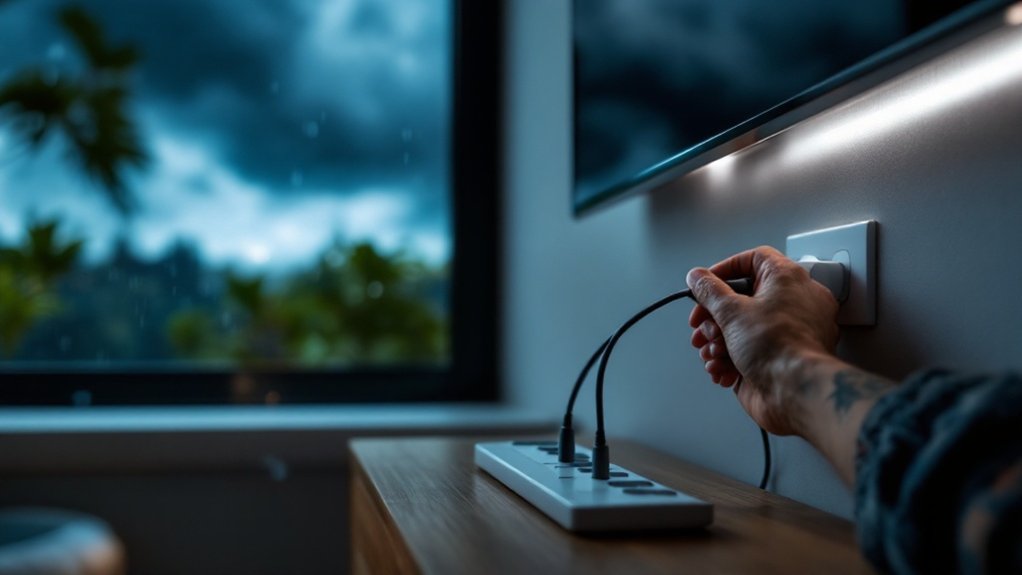
While thunderstorms can be unpredictable, one of the most reliable ways to safeguard our home’s electronics is to unplug critical devices before the storm arrives. By unplugging computers, TVs, kitchen appliances, and even surge protectors, we greatly reduce the risk of surge damage from lightning-induced voltage spikes. Power surges can burn out circuits and cause permanent failure, even if the lightning strike is miles away. Although surge protectors provide some defense, they can’t fully prevent damage—unplugging guarantees complete isolation from electrical hazards. To maximize unplugging benefits, it’s best to disconnect equipment at the first sign of bad weather, ensuring safety by using dry hands and standing on non-conductive surfaces. Lightning can strike up to ten miles away from where it’s raining, which means even distant storms pose a real threat to plugged-in devices. As a community, let’s protect our devices and invest in long-lasting electrical reliability together.
Avoiding Electrical Contact During Thunderstorms
After we’ve unplugged vulnerable electronics, it’s just as important to limit our exposure to electrical hazards throughout the duration of the storm. For storm preparedness, let’s avoid using corded phones, computers, or any plugged-in devices, as lightning can induce surges through outlets and wiring. Refrain from touching plumbing fixtures, such as sinks, showers, or washers—these are conductive and can carry dangerous electrical currents. Proper grounding techniques mean keeping our distance from metal objects, including window or door frames and concrete surfaces that may contain rebar. It’s best to stay in interior rooms, away from windows and exterior walls, minimizing contact with any conductive materials. Using only battery-operated or wireless devices indoors adds another layer of protection, ensuring our safety during the thunderstorm. Always remember that lightning is deadly and being aware of these hazards is critical for protecting yourself and your household during inclement weather.
Protecting Your Devices With Surge Protectors
Even with careful preparation, thunderstorms can produce unpredictable power surges that threaten sensitive electronics in our homes. To minimize the risk, we rely on the right surge protector types—such as plug-in point-of-use protectors with high joule ratings—for devices like computers, TVs, and routers. Surge protection effectiveness depends on the protector’s quality, built-in indicator lights, and proper grounding. Direct lightning strikes are rare compared to other power surges, but the risks from internal or external spikes remain significant. Let’s remember, while surge protectors can help shield us from moderate surges and spikes, no unit guarantees complete defense—especially from the catastrophic energy of a direct lightning strike. That’s why it’s best practice to disconnect critical devices during severe storms. By understanding surge protector types and maximizing their surge protection effectiveness, we make informed choices to safeguard our community’s valuable technology investments together.
Installing Whole-House Lightning Protection
Let’s look at how whole-house lightning protection systems safeguard our homes by providing a direct, low-resistance path for lightning to safely reach ground, preventing structural and electrical damage. It’s critical that we select certified installers—licensed electricians experienced in UL-listed components and NFPA 780 standards—to guarantee compliance and long-term safety. By prioritizing professional installation, we maintain the integrity of the system and maximize our protection during severe storms. Surge protection devices, when properly installed at the main panel, serve as a first line of defense against lightning surges that can damage appliances and electronics throughout the house.
How Whole-House Systems Work
While thunderstorms pose significant risks to our home’s electrical systems, whole-house lightning protection systems offer a robust defense by integrating multiple surge protection devices at key points in the power supply. These systems work by placing surge protection not only at the utility meter but also between the meter and the main electrical panel. Lightning rods intercept direct strikes, channeling energy safely to ground, while devices on both the line-side and load-side intercept voltage spikes before reaching sensitive appliances. A good grounding system is crucial for effective surge protection, ensuring that excess electrical energy from lightning is directed safely away from household wiring and electronics. By coordinating surge protection at each junction—especially the electrical panel—we create layered, thorough security against both external lightning and internal surges. Regular inspections and system monitoring, such as checking LED status indicators, help guarantee every protection element remains effective, keeping our homes and community safe during severe storms.
Selecting Certified Installers
How do we guarantee whole-house lightning protection is installed to the highest standard? We begin by choosing certified installers with credentials from organizations like the Lightning Protection Institute (LPI) or UL Solutions. These professionals, especially LPI Master Installers and UL Certified Lightning Protection Professionals, bring proven technical skill and stay current through continuing education. Selecting a team with local expertise assures familiarity with specific codes, climate risks, and permitting requirements in our region. Local certified installers also respond quickly for installation, inspection, or repair. They use UL Listed components, follow UL 96A and NFPA 780 standards, and document compliance—key for insurance and safety. LPI contractors provide expertise in fire protection systems, which ensures that installation is completed safely and in accordance with industry regulations. Let’s prioritize proven teams with regional knowledge and strong reputations to protect our home and community with confidence.
Preparing Backup Power Sources
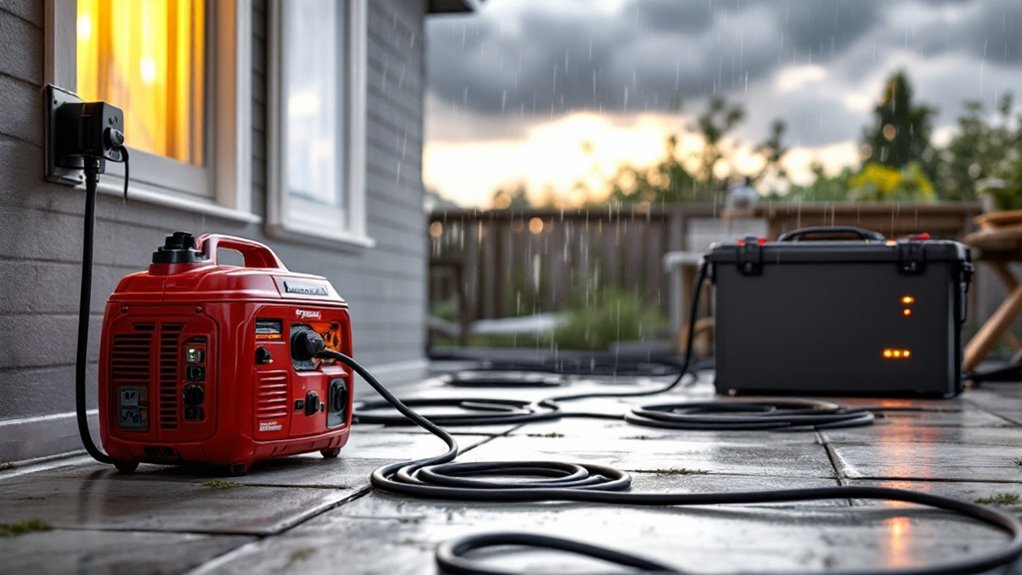
Let’s talk about selecting dependable backup generators and maintaining our emergency power systems to guarantee resilience when severe weather strikes. We’ll look at key safety features, proper sizing, and regular maintenance routines that keep our equipment ready and compliant with electrical codes. Staying proactive with these measures helps us minimize downtime and protect our households during outages. Remember, creating a priority list of essential items to be powered by the generator ensures you can supply electricity to what matters most if the power goes out.
Choosing Reliable Backup Generators
Given the severity of thunderstorms in our region, guaranteeing reliable backup power is crucial for both safety and comfort. When we’re choosing backup generators, it’s important to look at reputable generator brands like Generac, Cummins, and Kohler—each known for durability and reliability. Generac Home Standby Generators, for example, offer automatic operation and multiple fuel options, including natural gas and propane, which provide flexibility when outages strike. Key features such as automatic transfer switches, weather-resistant enclosures, and proper ventilation are essential for safe installation and operation. By selecting the right size based on our household’s needs, we can maintain power to critical circuits. As always, professional installation guarantees safety compliance and proper integration with our home’s electrical system. Familiarizing yourself with the generator and its backup systems before storm season helps ensure you know how to respond quickly and safely when severe weather causes disruptions.
Maintaining Emergency Power Supplies
While choosing the right generator provides peace of mind during power interruptions, sustained reliability depends on consistent maintenance and readiness of all backup power sources. To guarantee our emergency systems perform when needed, we must prioritize battery maintenance—rotating alkaline batteries every 6–12 months, keeping battery banks charged, and replacing worn batteries to avoid device failures. For generator storage, store portable units in dry, ventilated areas; add fuel stabilizer every 3–6 months, and replace air and oil filters as the manufacturer recommends. It is also important to include a map of the local area in your emergency kit, as it can help when navigation or digital devices fail during a storm. Monthly testing—running generators for 15–30 minutes—supports operational readiness. Inspect all extension cords and power lines for frays. Including surge protectors and grounding systems adds crucial protection for sensitive electronics. Safety-focused maintenance keeps our community resilient and connected, even during severe storms.
Maintaining and Testing Electrical Safety Devices
Because thunderstorms can introduce substantial electrical risks, maintaining and testing your home’s electrical safety devices is crucial for protecting both people and property. We must prioritize regular attention to GFCIs, AFCIs, circuit breakers, and surge protectors to support device longevity and guarantee safety compliance with local codes. Professionals should handle installations—precise placement and proper wiring optimize performance and reduce hazards. Regular maintenance ensures safety and efficiency of the electrical system, making it even more important to follow recommended inspection and testing schedules throughout the year. We’re diligent about monthly testing of safety devices, logging inspection dates, and monitoring device function, especially after storms. Cleaning components with a dry cloth and tightening wiring connections prevents malfunction. Visible damage or unreliable performance signals the need for prompt replacement. Finally, scheduling annual inspections with licensed electricians guarantees our systems meet evolving standards and keeps our home safe, together, no matter the weather.
Safe Use of Electrical Appliances During Storms

Let’s prioritize safety by unplugging nonessential electrical devices before a thunderstorm to reduce the risk of costly surge damage or electrical shock. We also need to keep all electronics and appliances away from water sources, since lightning can travel through plumbing systems and increase hazard potential. In fact, cordless phones and cell phones that are not plugged into chargers are considered safe to use during a storm, because they do not conduct electricity from lightning strikes. By following these fundamental practices, we’ll protect both our equipment and ourselves during severe weather events.
Unplug Devices Before Storms
Although thunderstorms can strike with little warning, taking proactive measures to unplug devices before the storm arrives is essential for safeguarding both our electronics and overall home safety. Thorough storm preparation means we disconnect all devices—never unplugging during active lightning to prevent electrical shock. For effective device protection, we prioritize surge-sensitive items such as computers, TVs, smart appliances, and home office equipment. It’s vital to remove not only power cords but also Ethernet and phone lines, as these often provide indirect lightning paths. Surge protectors and battery backups offer limited defense; direct or indirect strikes still threaten internal components. Damage from lightning strikes may not be immediately obvious, so if your devices stop working after a storm, a professional assessment is recommended. Don’t overlook common appliances like coffee makers or hair tools—modern models have sensitive circuitry. Together, these steps help us build a resilient, storm-ready home community.
Avoid Water With Electronics
During a thunderstorm, it’s critical we avoid using electrical appliances near water sources, since lightning can travel through both plumbing and wiring, increasing the risk of electric shock. For ideal water safety, let’s stay away from activities like washing dishes, showering, or even using sinks during storms. Water is an excellent conductor, so combining water and electronics greatly elevates shock hazards. Even being inside your house is not a guarantee of safety if you’re using electrical devices connected to plumbing or wiring during a storm, since lightning can strike a home’s structure and travel through these systems. To prioritize electronics safety, don’t operate devices plugged into outlets near any water source. This includes kitchens, bathrooms, and utility rooms. Remember, electrical currents from a nearby lightning strike can travel through metal pipes as easily as through wiring. By respecting these hazards, we’re not just protecting our devices—we’re keeping our whole community safe, reinforcing the culture of care we value together.
Landscaping and Outdoor Electrical Safety
One essential component of thunderstorm preparation is ensuring that your landscaping and outdoor electrical systems are as safe and resilient as possible. Effective landscape planning means keeping trees and tall features well clear of power lines and electrical panels, reducing the risk of faults or fire during storms. We need to avoid installing outlets or lighting near areas susceptible to pooling water, as moisture increases shock hazards. Regular maintenance of outdoor lighting systems is advisable to prevent storm-related electrical failures. Every season, let’s conduct routine electrical inspections—checking outdoor lighting fixtures, outlets, and conduits for weather damage or exposed wiring. Use high-grade aluminum or steel fixtures with weather-resistant finishes for maximum durability. Unplug or disconnect landscape lighting transformers before storms, and make sure all circuits are protected by ground-fault circuit interrupters (GFCIs). Promptly replace damaged electrical components for continued safety.
Ensuring Safety After a Storm Passes
After a thunderstorm moves through, we must approach electrical safety with vigilance before reentering our homes or restoring power. In the storm aftermath, let’s stay clear of downed powerlines—report them at once for professional handling—and hold off on using appliances until the utility confirms power stability. Inspect circuit breakers, fuse boxes, and structural elements for damage, using flashlights—not candles—to avoid fire risk. Because flash flooding can occur in the hours following a thunderstorm, be extremely cautious in low-lying areas and basements where water may rise unexpectedly. Wait for utility crews to restore and authorize power; don’t reconnect or use portable generators indoors to prevent carbon monoxide buildup. Community assistance is essential—check on neighbors, share updates, and report hazardous areas. Document any damages for insurance and call licensed electricians, like those at Pride Electric, to assess and repair potential electrical hazards before powering up systems.
Emergency Supplies and Family Preparedness Planning
A thorough emergency preparedness plan starts with assembling essential supplies and outlining clear action steps for our household. Building a detailed emergency kit means including at least three days’ worth of water (one gallon per person per day), non-perishable food, a well-stocked first aid kit, flashlights, extra batteries, a portable radio, and basic tools. Let’s account for family members with special needs—such as medications, pet food, or baby supplies—to guarantee everyone’s safety. Effective family communication is critical: designate a meeting point, document emergency contacts, and keep crucial documents like insurance and IDs in an accessible, waterproof container. Regularly review and update kit contents for expiration. Store the kit in a shelter location, such as a basement or interior room, for quick and reliable access during emergencies. Engage with community preparedness and make sure every family member understands our emergency protocol for maximum readiness.
Frequently Asked Questions
How Can I Find a Qualified Electrician in My Area?
When we’re seeking a qualified electrician nearby, let’s verify electrician qualifications, guarantee local licensing, review customer feedback, and confirm proper insurance. Solid credentials, up-to-date certifications, and a strong reputation mean we’re choosing someone who values safety like we do.
Will My Homeowner’s Insurance Cover Electrical Storm Damage?
When we talk about homeowner coverage for storm damage, most policies include wind or hail-related electrical issues, but power surges are often excluded. It’s essential we review our policy details and consult professionals for complete electrical safety assurance.
Are Solar Panels Safe During Thunderstorms?
When we discuss solar panel safety during thunderstorms, we emphasize proper grounding, surge protection, and secure mounting—all essential for storm preparation. Together, let’s guarantee your system’s resilience and your peace of mind with every approaching storm.
Do Electrical Vehicle Chargers Need Extra Protection From Lightning?
It is understood that EV chargers absolutely require lightning protection to guarantee charger safety and long-term reliability. Let’s prioritize surge protection devices and grounding—these industry-proven defenses help safeguard your charging equipment, and together, we keep our homes and community resilient.
How Do I Recognize Electrical Fire Hazards After a Storm?
After a storm, let’s watch for exposed wiring, scorch marks, buzzing at outlets, and water-damaged panels—key electrical fire hazards. For electrical safety and storm preparedness, we shouldn’t restore power or use appliances until a licensed electrician inspects everything.
Conclusion
By taking proactive steps—like unplugging sensitive electronics, investing in surge protection devices, and maintaining safe electrical practices—we can greatly reduce storm-related risks. Let’s not overlook outdoor electrical hazards or backup power requirements, either. Storms are unpredictable, but with sound preparation and the right safety measures, we’re protecting not just our homes and devices, but our loved ones, too. At Pride Electric, we’re here to help guarantee your electrical system stays resilient no matter what the Georgia weather brings.
