
We often see circuit breakers trip due to overloaded circuits, plugging too many devices into one line, or running high-draw appliances like space heaters and vacuums together. Short circuits or ground faults, especially in damp areas, are also common culprits and can be major safety risks. Power surges and arc faults from damaged wiring or lightning add to the problem. If you’re still having trouble, we’ll show you what steps to take for better safety and prevention.
Key Takeaways
- Overloaded circuits happen when too many devices draw more power than the circuit can safely handle.
- High-draw appliances like space heaters or hair dryers can overload a circuit, especially if several run on the same line.
- Short circuits occur from damaged wiring or loose connections, causing immediate and repeated tripping.
- Ground faults, common in wet areas, happen when electricity escapes its intended path, often tripping GFCI outlets.
- Power surges and arc faults from lightning, loose wiring, or damaged connections can cause frequent breaker trips.
Overloaded Circuits
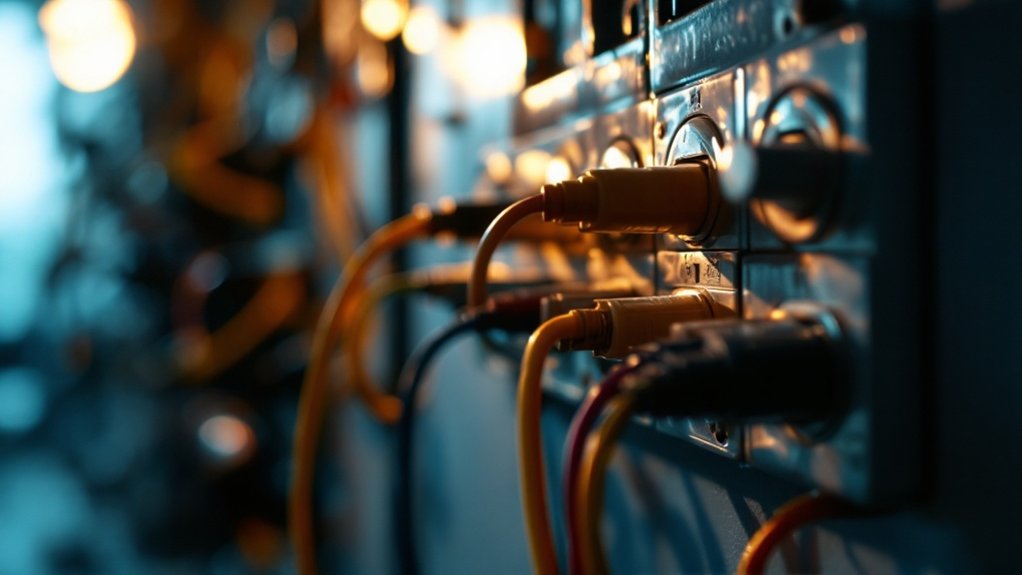
One of the most common reasons circuit breakers trip is due to overloaded circuits. When we connect too many devices to a single circuit, it exceeds the circuit’s designed power capacity, often 1800 watts for a standard 120-volt, 15-amp line. This puts the wiring at risk, leading to breaker trips as a vital safeguard in electrical safety. Signs include frequent tripping, heated wires, or even singed outlets—clear indicators that circuit maintenance is needed. Circuit breaker trips to prevent overheating and damage, acting as a crucial protective feature whenever an overload occurs. We can prevent overload by carefully monitoring what’s plugged in, labeling our circuits, and periodically using power monitoring devices. Minimize extension cords and schedule regular inspections for peace of mind. As a community, protecting our homes and families starts with prioritizing safe, well-maintained circuits every day.
High-Draw Appliances
When we rely on high-draw appliances like space heaters, vacuums, or hair dryers, our electrical system faces intense current demands that often push circuits close to their rated capacity. If faulty appliances—those with aging wiring or damaged insulation—are in use, the risk of tripping increases sharply. Not only do these faulty appliances draw more power than intended, but they can overheat, triggering breakers as a crucial safety response. Multiple devices used simultaneously on the same circuit can easily cause overload, so spreading out their usage across separate circuits can help prevent repeated tripping. To minimize disruption and improve safety, it’s best to install dedicated circuits for high-draw devices. This means the appliance gets its own breaker and doesn’t share with other outlets, keeping loads within safe limits. Regular maintenance and replacing worn-out appliances also help guarantee our breakers trip only when truly necessary, protecting everyone and our home.
Short Circuits
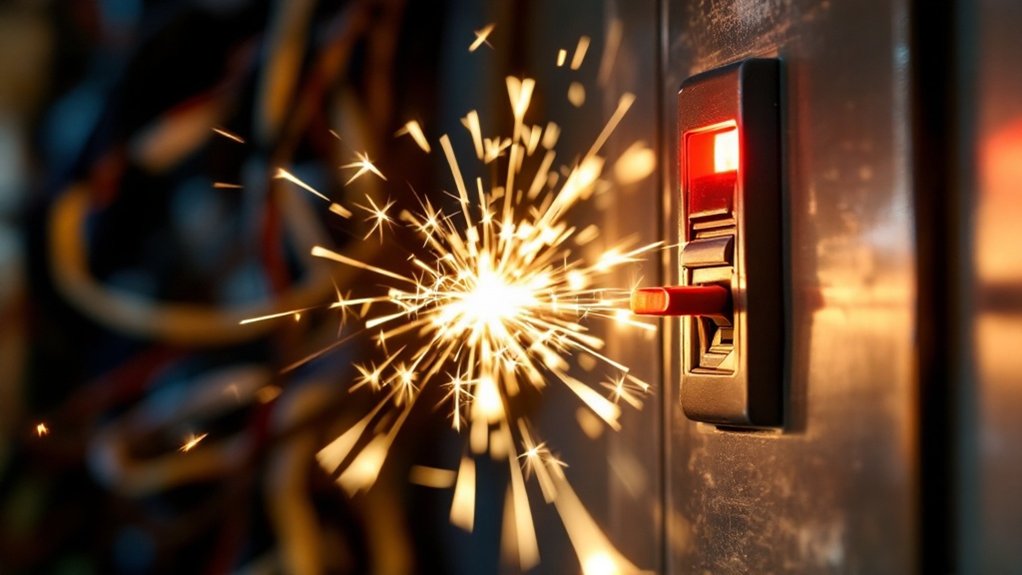
Although short circuits are a common cause of circuit breaker tripping, they demand immediate attention due to the serious risks involved. Let’s look at the primary short circuit causes: loose connections, worn-out wires, damaged insulation, improper installation, and environmental factors like moisture. These issues expose live wires, creating a direct path for electricity and resulting in frequent tripping. Ignoring short circuit consequences—such as electrical fires, appliance damage, and even electrical shock—can put our homes and families at risk. To diagnose a short circuit, we should perform a visual inspection, check the panel for burnt smells, and use a multimeter for testing. For added safety, be aware that short circuits almost always trigger a breaker trip or a fuse blow, which serves as a warning sign and a crucial layer of protection. If you notice signs of a short, reach out to a trusted electrician promptly. Let’s keep our electrical systems safe together.
Ground Faults
Alongside short circuits, ground faults are another frequent cause of circuit breaker tripping and demand fast, careful attention due to their shock risk. A ground fault happens when electricity veers off its intended path, usually due to worn insulation, moisture, or damaged appliances. These faults are especially common in bathrooms, kitchens, garages, or outdoor circuits—places where water and electricity are close together. For effective ground fault detection, we rely on GFCI testing. GFCIs detect current flowing along unintended paths, such as through water or a person, and trip quickly when they sense even small leakages. Press the test and reset buttons on GFCI outlets every month to confirm protection is active and responsive. If your breaker trips often in these areas, unplug all devices, inspect for damage, and check junction boxes for moisture. For persistent issues, call a licensed electrician to guarantee our community’s safety.
Power Surges and Arc Faults

While power surges and arc faults are distinct electrical hazards, both can cause your circuit breakers to trip unexpectedly. Power surges, often triggered by lightning strikes, grid fluctuations, or switching off major appliances, send a brief spike in voltage through your system. This can wear down breakers over time and, if frequent, increase the likelihood of nuisance tripping or system failure. On the other hand, arc faults happen when electricity jumps between damaged wires or loose connections—often from old insulation or accidental cuts. Arc fault circuit interrupters (AFCIs) are essential, as they detect and stop arcs before a fire can start. To protect our homes and businesses, we should schedule regular electrical inspections and install appropriate surge protection and AFCIs throughout susceptible areas. Keeping your appliances on the same circuit can amplify these issues, as it may overload the wiring and increase the risk of both surges and arc faults.
Frequently Asked Questions
How Do I Reset a Circuit Breaker Safely?
When resetting your circuit breaker, let’s always prioritize safety precautions. Together, we’ll locate the breaker box, identify the tripped switch, address any causes, then firmly move the switch off before carefully turning it back on to restore power.
When Should I Call a Licensed Electrician for Breaker Issues?
If your breaker keeps tripping after basic troubleshooting, shows possible breaker overload, or you suspect wiring issues, let’s stay safe together—don’t hesitate to call us, your licensed electricians, for professional diagnosis and repairs you can trust.
Can Old or Faulty Breakers Themselves Cause Frequent Tripping?
Absolutely, old or faulty breakers can cause frequent tripping. If your breaker’s lifespan is nearing its end or there’s faulty wiring, we strongly recommend contacting professionals—your safety and reliable power matter to our community.
What Are the Signs My Electrical Panel Needs Upgrading?
When we notice panel age over 25 years, visible rust, heat, or wiring issues, we recognize it’s time to upgrade. Flickering lights, burning smells, or frequent breaker trips are critical safety warnings—let’s address them together.
How Often Should I Schedule Electrical Maintenance for My Home?
We recommend prioritizing electrical safety by scheduling home inspections every 3 to 5 years, or sooner if your home is older or heavily used. Regular electrical maintenance keeps our community safe, efficient, and up to code.
Conclusion
When our circuit breakers trip, it’s a signal we shouldn’t ignore. By understanding the top reasons—overloaded circuits, high-draw appliances, short circuits, ground faults, and power surges or arc faults—we can spot problems early and keep our homes safe. If you’re unsure or the issue keeps coming back, don’t hesitate to reach out to a licensed electrician. Your safety matters, and together, we can guarantee your electrical system runs smoothly and reliably.
