
We recommend starting your electrical safety inspection with the circuit breaker panel, checking for proper amperage, clear labeling, and signs of water damage or corrosion. Next, examine all outlets for proper GFCI protection in wet areas, looking for discoloration, burning odors, or loose connections. Don’t forget to verify the home’s electrical service capacity, typically needing 200 amps for modern demands. Our thorough guide covers additional critical safety points for protecting your investment.
Key Takeaways
- Inspect the circuit breaker panel for signs of water damage, corrosion, and proper labeling of circuits.
- Check for outdated wiring systems like aluminum conductors, knob-and-tube wiring, or two-slot outlets that need replacement.
- Verify GFCI protection in kitchens, bathrooms, and outdoor areas, ensuring proper functionality through testing.
- Confirm the home’s electrical service capacity meets modern needs, with at least 100 amps recommended for residential use.
- Look for warning signs like burning odors, discolored outlets, frequent circuit trips, or flickering lights indicating electrical problems.
Essential Circuit Breaker Panel Checks
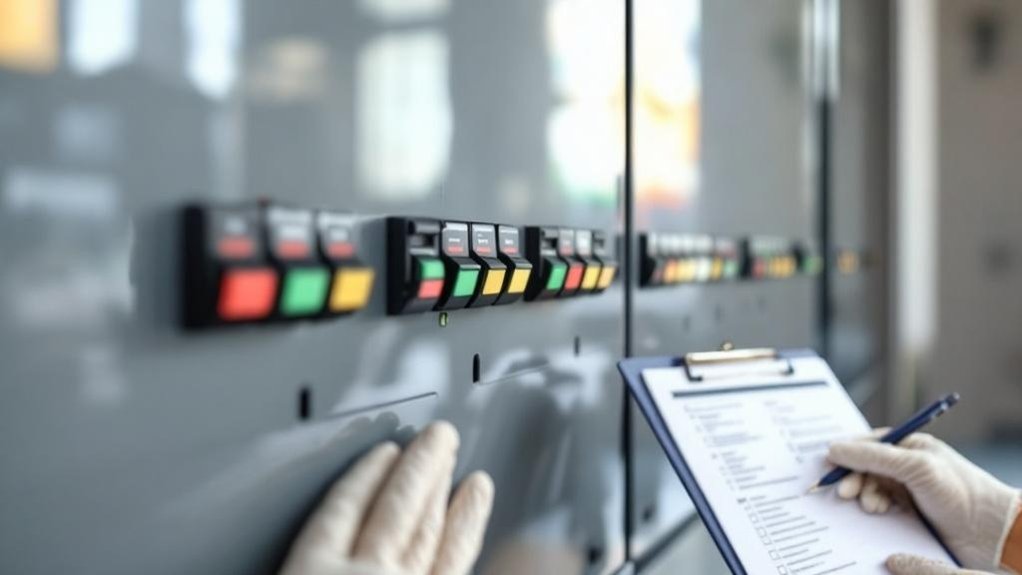
When it comes to electrical safety, proper circuit breaker panel maintenance is essential for preventing hazards and guaranteeing reliable power distribution. We’ll want to start by examining panel accessibility, confirming there’s clear access and adequate lighting for safe inspections. The panel door should operate smoothly, and we’ll check for any signs of water damage or corrosion. It’s crucial to ensure full compliance standards are met according to the National Electric Code.
Next, we’ll verify breaker functionality by testing that each circuit breaker trips correctly and is properly labeled. We’ll confirm the amperage ratings match wire sizes and look for any double-tapped breakers that aren’t designed for multiple connections. All wiring should be securely connected, properly color-coded, and protected by appropriate bushing retainers. Finally, we’ll verify proper grounding connections and inspect the neutral bus bar’s isolation from the ground bus bar.
Evaluating Outlet Safety and Functionality
Since outlet safety directly impacts daily electrical usage, a thorough inspection of every outlet’s condition and functionality is essential for maintaining a secure electrical system. We’ll help you identify potential hazards by checking that outlets remain cool to touch and all plugs fit snugly without wobbling.
When evaluating your home’s outlets, we recommend looking beyond basic functionality. Watch for signs that might indicate the need for outlet upgrades, such as discoloration, crackling sounds, or burning odors. Avoid using plug adapters that can overload circuits and create fire risks. Instead, confirm proper coverage with adequate outlets in each room. Pay special attention to outlets in moisture-prone areas, which should have GFCI protection, and install tamper-resistant options in areas accessible to children. Remember to perform monthly GFCI tests to ensure these critical safety devices are functioning properly.
GFCI Protection in Wet Areas

We’ll examine GFCI protection requirements in wet areas like kitchens, bathrooms, and outdoor spaces where electrical shock risks are heightened. GFCI outlets are essential safety devices that quickly shut off power when they detect ground faults or current imbalances that could lead to dangerous shock hazards. Monthly testing of GFCI outlets using the “TEST” and “RESET” buttons guarantees these critical safety devices remain functional and ready to protect against electrical accidents.
GFCI Installation Requirements
Because water and electricity create a dangerous combination, Ground Fault Circuit Interrupter (GFCI) protection is mandatory in specific areas of your home where moisture is present. Current GFCI standards require protection in bathrooms, kitchens, laundry rooms, garages, basements, and outdoor areas. We’ll help guarantee your home meets these essential safety requirements. Proper installation requires outlets to be positioned 12 inches above floor to prevent potential water damage.
GFCI features include automatic power shutoff when detecting current imbalances, protecting you from potentially fatal shocks. In kitchens, all countertop outlets and receptacles within 6 feet of sinks must have GFCI protection. Bathrooms require GFCI outlets at every receptacle near water sources. For proper installation, we recommend having a licensed electrician verify correct line and load terminal connections and test each outlet’s functionality using approved testing methods.
Testing Monthly for Safety
While proper GFCI installation provides essential protection against electrical shock hazards, monthly testing is crucial to guarantee these safety devices remain functional in wet areas of your home. We understand GFCI maintenance tips can seem overwhelming, but the testing process is straightforward and critical for your family’s safety.
Building codes require all bathrooms to have at least one GFCI outlet installed. Let’s review the essential GFCI testing importance: Press the “TEST” button to simulate a fault condition – the outlet should immediately cut power. Then, press “RESET” to restore service. If the outlet fails this simple test, contact us at Pride Electric for immediate replacement. Remember, GFCIs can fail silently while still providing power, leaving you unprotected. We recommend marking your calendar for monthly checks, as studies show properly maintained GFCIs prevent over 70% of residential electrocutions in wet areas.
Signs of Outdated or Dangerous Wiring
Do you know if your home’s electrical system is sending warning signals of potential hazards? Let’s review essential signs that indicate your wiring may be outdated or dangerous. When we spot burning odors, discolored outlets, or warm switch plates, these overheating signs warrant immediate attention from a qualified electrician.
We need to be vigilant about visible wiring hazards, including frayed cables, loose connections, and exposed copper wiring. Homes built between 1965 and 1973 may contain aluminum conductors that pose significant fire risks. Frequent circuit breaker trips, flickering lights, or blown fuses suggest your system can’t handle modern power demands. Two-slot outlets without proper grounding, knob and tube wiring, or old fuse boxes are telltale indicators of outdated systems that require updating. Remember, electrical failures cause thousands of home fires annually, making it vital to address these warning signs promptly.
Assessing Electrical Load Capacity

We’ll examine how electrical loads must be properly distributed across circuits to prevent dangerous overloading of your home’s wiring system. A typical modern home requires a 200-amp service panel to safely handle multiple appliances, HVAC systems, and general household electrical demands. Understanding your home’s total amperage service limits helps guarantee you’re not exceeding capacity, which can lead to tripped breakers, overheated wires, or potential fire hazards. Regular load calculation reviews are essential as household electricity demands change over time to maintain system safety and efficiency.
Circuit Load Distribution Basics
Understanding circuit load distribution is essential for maintaining a safe and efficient electrical system in your home or business. When we evaluate your electrical setup, we’ll assess how power flows through your distribution network, including feeders, laterals, and service drops that connect to your property’s main electrical panel. For enhanced security, we utilize advanced protection measures similar to leading security services to prevent electrical system vulnerabilities.
We’ll perform detailed circuit load calculations to guarantee your system can handle peak demand periods without overloading. This includes examining both single-phase and three-phase configurations, depending on your property’s requirements. We’ll also check for unbalanced loads, which can occur when power isn’t distributed evenly across circuits. Our assessment covers your distribution transformers, which step down voltage from primary lines to usable household levels, typically 120/240V for residential properties.
Understanding Amperage Service Limits
When evaluating your property’s electrical system, knowing your amperage service limits is vital for safety and functionality. We’ll often find that older homes were built with 30 or 60-amp services, which fall short of modern needs and historical standards. Today’s residences typically require at least 100 amps, with 200 amps becoming the new standard. The capacity can be determined by examining the service entry cable, which often displays the amperage rating directly on it.
Understanding amperage significance helps us make informed decisions about our electrical systems. We need to take into account factors like panel size, future expansion plans, and the demands of modern appliances. If you’re planning to add major electrical equipment or pondering full home electrification, we’ll want to confirm your service capacity can handle the load. Working with licensed electricians is critical for accurately evaluating your system’s capabilities and determining if an upgrade is necessary.
Key Lighting Fixture Inspections
Three critical aspects of lighting fixture inspections demand regular attention: secure mounting, proper wiring, and component integrity. We’ll examine these elements systematically to guarantee your home’s lighting efficiency and fixture aesthetics meet professional standards.
Let’s start with mounting security—fixtures must be firmly attached to prevent loosening over time. We’ll verify that all hardware is tight and mounting brackets are properly installed. Next, we’ll inspect the wiring connections, ensuring they’re correctly secured and concealed within walls or ceilings. Proper GFCI outlet testing is essential when fixtures are installed in wet areas or outdoors. Finally, we’ll evaluate component integrity by checking all parts, from bulb sockets to switches, confirming they’re functioning smoothly and safely.
Remember to maintain detailed records of these inspections and immediately address any issues we discover to protect your investment and guarantee continuous safe operation.
Extension Cord Usage and Warning Signs
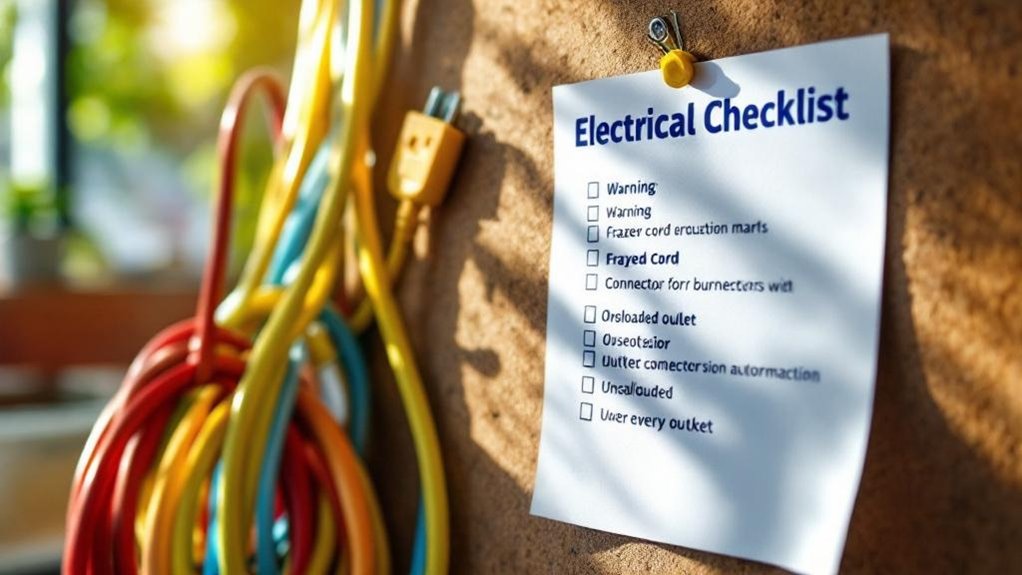
When we’re working with extension cords in our homes and businesses, we’ll need to follow strict safety protocols to prevent electrical fires and shock hazards. We’ll want to inspect cords regularly for signs of damage like frayed insulation, missing ground pins, or excessive heat during use, and immediately replace any compromised cords. We must also avoid common unsafe practices such as daisy-chaining multiple cords together, running them under carpets, or exceeding their rated capacity with high-amperage devices. For outdoor applications, it’s essential to use extension cords specifically marked for outdoor use to ensure proper protection against moisture and environmental conditions.
Safe Extension Cord Practices
Extension cord safety remains a critical aspect of preventing electrical hazards in homes and workplaces. We’ve found that proper cord maintenance begins with selecting UL-approved cords and using them only for temporary purposes. Let’s guarantee we’re following essential extension safety practices: never overload cords with multiple appliances, avoid running them under rugs or furniture, and keep them away from high-traffic areas.
Together, we can prevent common hazards by inspecting cords regularly for signs of wear, such as frayed wires or cracked sockets. When using extension cords outdoors, we must choose only those specifically marked for exterior use. Remember, major appliances should connect directly to wall outlets, and we should never create chains of multiple extension cords. By maintaining proper storage in dry areas and disposing of damaged cords promptly, we’ll maintain a safer electrical environment. Always pull the plug end rather than yanking the cord when disconnecting from an outlet.
Common Hazard Prevention Tips
Building upon safe cord practices, an extensive approach to electrical hazard prevention incorporates clear warning signs and proper hazard communication. We recommend inspecting all electrical warning signs for proper sign visibility, confirming they’re positioned at key access points and near potential hazards. High-contrast colors and reflective materials should be used in areas with limited lighting. Regular inspection ensures last line of defense against electrical accidents through proper warning signage.
Let’s prioritize safety education by familiarizing ourselves with standardized warning labels and their meanings. We’ll want to verify that signs comply with OSHA 1910.303 requirements, displaying essential information like voltage ratings and wattage. All electrical rooms should have restricted access signage, while equipment requiring lockout/tagout procedures must be clearly marked. In multilingual environments, we’ll need universal symbols or bilingual signs to affirm effective hazard communication across our entire household.
Professional Inspection Requirements
Professional electrical inspections require licensed, certified electricians to confirm compliance with the National Electrical Code (NEC) and local regulations. We recommend scheduling these inspections every 3-5 years to maintain your home’s safety and insurance validity. A licensed electrician will thoroughly evaluate your electrical panels, outlets, switches, and wiring for potential hazards. Homes built before 1998 should undergo inspections more frequently at every 2-3 years.
During inspection, we’ll test GFCI protection, verify proper grounding, and examine wire gauges to ascertain they match load requirements. The inspection benefits include early detection of fire risks, confirmation of safety device operation, and identification of outdated installations needing updates. We’ll verify that dedicated circuits meet code requirements and that all electrical components are correctly installed, labeled, and maintained according to current standards.
Documentation of Past Electrical Work

Maintaining detailed records of electrical installations and modifications forms the foundation of a thorough safety program. As homeowners, we need to verify that all past electrical work meets current standards through proper documentation significance and compliance verification. Distribution board schedules must be readily accessible near electrical panels for quick reference during emergencies or maintenance.
We recommend collecting several vital documents: detailed installation diagrams showing circuit types and conductor specifications, permits and inspection reports confirming work was properly authorized, and certification documents from registered electricians. These records should include extensive blueprints, component lists, and testing results that demonstrate regulatory compliance.
Having complete documentation not only guarantees our safety but also provides essential information for future modifications. It’s essential to maintain user manuals, warranty information, and maintenance guides to protect our investment and keep our electrical systems running safely.
Child Safety Measures and Upgrades
With our electrical documentation organized, we’ll turn our focus to implementing child safety measures throughout the home. Let’s prioritize outlet safety through a thorough approach that includes tamper-resistant receptacles (TRRs) and sliding outlet covers in accessible areas. Our childproofing strategies should extend to cord management using shorteners, clips, and concealers to eliminate tripping hazards and prevent tugging.
Since 7 children per day require emergency care due to electrical incidents, establishing comprehensive safety measures is crucial. We’ll upgrade areas near water sources with GFCI outlets and water-resistant receptacles, maintaining proper distances between electrical sources and moisture. Smart home integration can provide additional monitoring capabilities, while LED lighting reduces heat risks. Remember to secure loose cords with wall anchors and furniture clips, and install outlet box guards where extra protection is needed. These measures create multiple layers of protection for your family.
Frequently Asked Questions
How Often Should Smoke Detectors Be Replaced in a Home?
We recommend replacing your smoke detectors every 10 years, regardless of functionality. Don’t forget smoke detector maintenance includes monthly testing and annual alarm battery replacement to guarantee your family’s safety.
What’s the Typical Lifespan of Electrical Wiring in Residential Properties?
We typically see residential wiring last 50-100 years when properly installed, with copper wiring materials offering the longest durability. However, installation techniques and environmental conditions greatly influence this lifespan.
Should Ceiling Fans Be Included in a Pre-Purchase Electrical Inspection?
We strongly recommend inspecting ceiling fans during pre-purchase evaluations since they’re essential components of electrical safety. Their installation, wiring connections, and load capacity directly impact your home’s overall electrical integrity.
Are Smart Home Electrical Systems More Prone to Failures?
While smart home systems have unique vulnerabilities, they’re not inherently more failure-prone. We’ve found that regular system maintenance and monitoring actually help us detect and prevent electrical issues more effectively.
How Much Does Upgrading From Aluminum to Copper Wiring Typically Cost?
We typically see wiring materials and installation costs ranging from $20,000 for multifamily units to $50,000+ for single-family homes, though pigtailing can reduce expenses to around $2,000-$3,000.
Conclusion
We’ve provided this electrical safety checklist to empower your home-buying decisions with professional-grade insights. While it’s crucial to perform these preliminary assessments, we strongly recommend engaging a licensed electrician for a thorough evaluation. By implementing these technical guidelines and maintaining proper documentation, you’ll safeguard your investment and guarantee your family’s safety in your new home through code-compliant electrical systems.
