
Smoke detectors should be replaced every 10 years per NFPA guidelines, regardless of their apparent condition. We recommend fall as the ideal season for replacement, coinciding with daylight saving time when you’re already checking batteries. Carbon monoxide detectors need replacement more frequently—every 5-7 years. Don’t wait for erratic behavior or physical damage to signal replacement. Our thorough timeline guarantees your home stays protected when you need it most.
Key Takeaways
- Replace smoke detectors every 10 years from the manufacture date, regardless of their apparent condition.
- Replace immediately if your detector fails monthly tests, shows physical damage, or experiences erratic alarm behavior.
- Carbon monoxide detectors need replacement more frequently, typically every 5-7 years.
- Replace all detectors if they lack visible manufacture dates, as they’re likely over 10 years old.
- Environmental factors like humidity, dust, and chemical exposure can necessitate earlier replacement than the standard timeline.
Understanding the 10-Year Replacement Rule
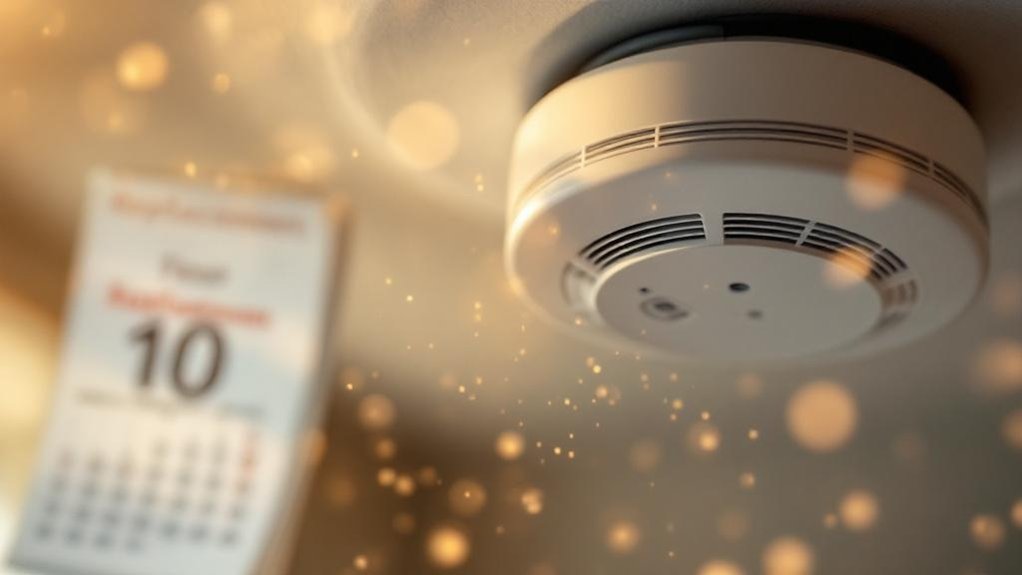
While many homeowners assume smoke detectors will last indefinitely, the 10-year replacement rule has become a standard safety guideline across the United States. The National Fire Protection Association and manufacturers both recommend replacing smoke alarms every decade, regardless of their apparent condition.
Many states have enacted 10-year regulations requiring smoke alarms with sealed 10-year batteries. These laws aim to prevent battery removal and guarantee continuous protection. New Jersey specifically mandates 10-year sealed battery smoke alarms for all newly installed battery-operated units as of January 1, 2019. If your smoke alarm lacks a visible manufacture date, it’s likely older than 10 years and should be replaced immediately.
Modern smoke alarm technology has improved considerably, making newer models more reliable and effective. Remember, smoke detectors degrade over time—nearly two-thirds of home fire deaths occur in residences without working alarms. Maintaining up-to-date detectors is essential for your family’s safety.
Warning Signs Your Smoke Detector Needs Immediate Replacement
Beyond the standard 10-year replacement timeline, certain warning signs indicate your smoke detector requires immediate attention.
One of the most common malfunction signs is erratic alarm behavior—whether it’s failing to sound during tests, emitting weak alerts, or triggering false alarms without apparent cause. Physical damage like cracks, discoloration, or corroded components also demands prompt replacement.
Watch for persistent battery issues despite using fresh replacements, which suggests deteriorating internal components. Remember that the test button is the only reliable method to verify your alarm’s functionality, not just checking for flashing lights. Environmental sensitivity issues are equally concerning—if your detector frequently activates from cooking smoke or steam when it previously didn’t, its sensors are likely compromised.
At Pride Electric, we’ve seen how ignoring these warning signs puts families at risk. Don’t wait until it’s too late—replace your detector immediately if you notice any of these critical indicators.
Carbon Monoxide Detectors: Different Timeline, Different Concerns
Unlike smoke detectors, carbon monoxide (CO) detectors follow a different replacement schedule that homeowners must understand for proper safety coverage. While smoke detectors typically last 10 years, CO detectors generally require replacement every 5 to 7 years, with some newer models extending to 10 years.
We can’t emphasize enough the importance of this timeline difference for your family’s safety awareness. CO is colorless and odorless, making functioning detectors your only defense against this silent threat. Most modern detectors include end-of-life warning signals—beeping every 30 seconds when replacement is needed. Specifically for Kidde models, most CO alarms manufactured after 2013 have a 10-year life span.
Don’t ignore these alerts, as detectors in end-of-life mode cannot detect carbon monoxide gas. Regular testing and following manufacturer guidelines are vital safety practices, especially before winter when fuel-burning appliances see increased use.
Monthly Testing Protocols to Ensure Detector Reliability
Testing your smoke detectors monthly represents one of the most critical maintenance tasks for ensuring your family’s safety. We recommend using the device’s test button or conducting simulated smoke tests for more thorough evaluation.
Proper notification procedures are essential before testing—always inform household members to prevent unnecessary panic. After each test, document the results for compliance and future reference. This regular practice helps identify potential issues early, reduces false alarms, and extends equipment life.
Remember that different testing methods may apply to interconnected systems. For hard-wired detectors, visual inspections should occur semiannually, while sensitivity testing is required within the first year of installation and every other year thereafter. According to NFPA 72 guidelines, successful initial testing can allow for biannual testing schedules, optimizing both safety and maintenance efficiency.
The Importance of Manufacture Date vs. Installation Date
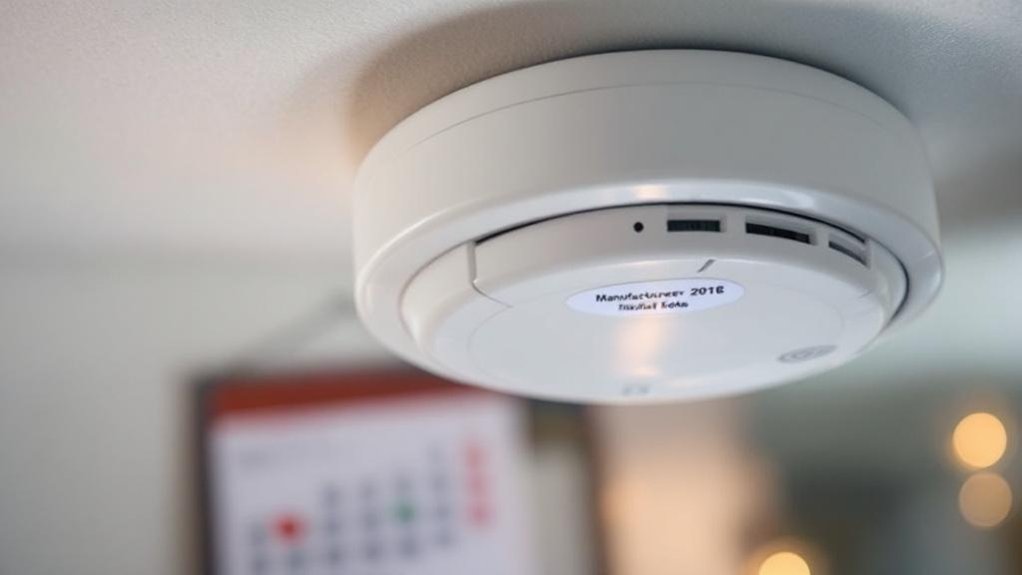
When determining the right time to replace your smoke detectors, understanding the critical difference between manufacture date and installation date can save lives. We recommend always prioritizing the manufacture date importance, as industry standards require replacement 10 years from when the device was made—not when it was installed.
Many homeowners mistakenly rely on installation date accuracy, but this can be dangerously misleading. A detector installed recently might actually be years old from its manufacturing date, potentially compromising your safety. The manufacture date is typically printed on the back or inside the alarm housing. Kidde specifically recommends replacing smoke alarms every 10 years to ensure optimal functionality and safety in your home.
Even devices with 10-year lithium batteries should follow this guideline. Remember, manufacturer recommendations supersede all other considerations, as they’re designed to guarantee peak protection for your family and home.
Seasonal Replacement Strategy: Why Fall Is Ideal
As daylight saving time signals the season’s change, fall emerges as the perfect time to replace your smoke detectors. This autumn safety practice aligns perfectly with the “Change Your Clock, Change Your Battery” campaigns that promote consistent maintenance.
Fall introduces increased fire risks as we turn on heating systems, cook indoors more frequently, and gather for holidays. By replacing detectors now, we guarantee maximum protection when our homes experience peak indoor occupancy during winter months.
This seasonal awareness strategy integrates naturally with other fall maintenance routines like chimney cleaning and HVAC servicing. The timing also prepares your home for winter when dry air and holiday decorations create additional hazards. Remember that smoke alarms have a limited lifespan of approximately 10 years and should be replaced according to manufacturer recommendations regardless of their apparent functionality.
At Pride Electric, we recommend using fall’s reminder to establish a consistent detector replacement schedule that keeps your family protected year-round.
Commercial vs. Residential Detector Replacement Guidelines
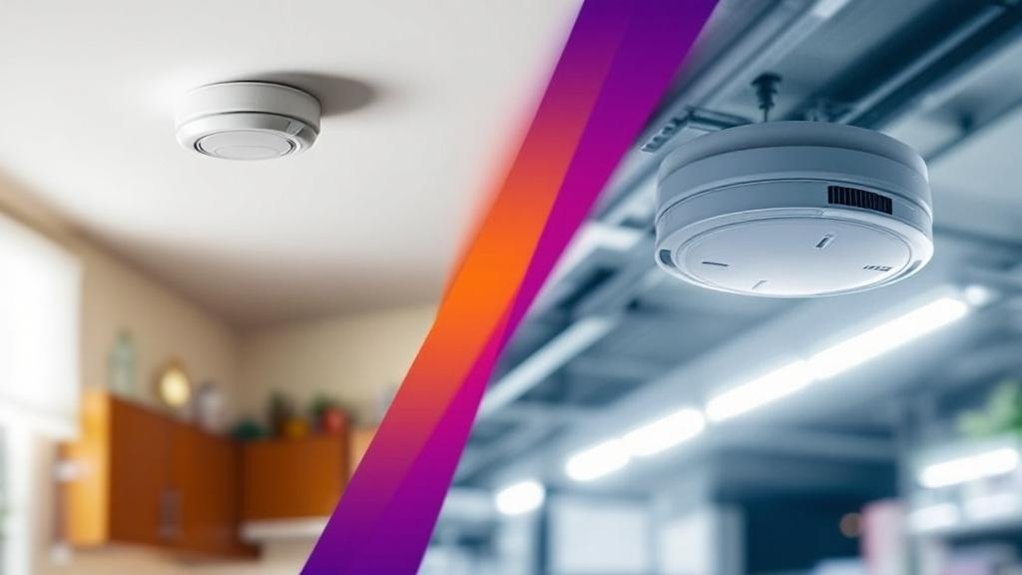
We test commercial smoke detectors more frequently than residential ones, with commercial installations requiring weekly visual checks and monthly testing versus residential detectors’ recommended monthly testing schedule. Both commercial and residential smoke detectors must be replaced every 10 years due to sensor degradation that affects detection performance. While homeowners can often maintain basic documentation of battery changes and testing dates, commercial buildings must keep detailed compliance records that meet NFPA codes and local fire authority standards. These stricter commercial requirements reflect the higher occupancy levels and greater liability concerns in business settings compared to homes.
Testing Frequency Differences
The testing frequency for smoke detectors varies greatly between commercial and residential settings due to different safety standards and regulatory requirements. At Pride Electric, we recognize these distinctions clearly.
Residential detectors typically need monthly testing with annual battery replacement and full replacement every decade. Commercial systems, however, demand more rigorous schedules—with visual inspections every six months and functional testing twice yearly at minimum. For commercial settings, NFPA 72 requires annual testing for smoke detector sensitivity with possible extension to five-year intervals following two consecutive appropriate test results.
Modern detector technology has also impacted testing protocols. Commercial buildings often utilize advanced systems with automatic sensitivity monitoring and field-adjustable calibration, requiring quarterly verification of control panels. Meanwhile, residential units rely primarily on manual testing.
Compliance Documentation Requirements
While testing frequency establishes a critical maintenance foundation, understanding documentation requirements represents an equally important aspect of smoke detector compliance.
Commercial settings face stricter documentation importance, requiring thorough records of installation dates, maintenance history, and replacement schedules to meet NFPA 72 standards. These records must be available for fire marshal inspections and insurance audits.
For residential settings, compliance challenges are less formal but still significant. Homeowners should keep purchase receipts to track detector age, while rental properties often require documented annual battery replacements and monthly testing. Commercial buildings must ensure detectors adhere to the spacing requirements outlined in fire codes based on ceiling height.
In both environments, properly maintained records facilitate timely 10-year replacements and demonstrate due diligence. At Pride Electric, we recommend organizing these documents alongside your routine maintenance schedule to avoid costly compliance oversights.
How Environmental Factors Impact Detector Lifespan
Environmental factors considerably impact your smoke detector’s operational lifespan, often reducing its effectiveness long before the standard 10-year replacement timeline.
Extreme temperature effects can degrade sensors and internal components, while humidity concerns lead to condensation that causes corrosion and false alarms. Dust buildup is particularly problematic in homes with active HVAC systems, blocking sensor pathways and diminishing reliability. We’ve also seen insect intrusion become a major issue during warmer months, with nests physically obstructing critical components. Chemical exposure from kitchen grease, cleaning agents, and cigarette smoke gradually degrades detection mechanisms. For ongoing protection against these environmental factors, consider implementing a security service similar to what many websites use to prevent system failures.
If your detectors are placed in challenging environments like bathrooms, kitchens, or unconditioned spaces, we recommend more frequent testing and potentially earlier replacement to guarantee your family’s continued protection.
Planning a Whole-Home Detector Replacement Schedule
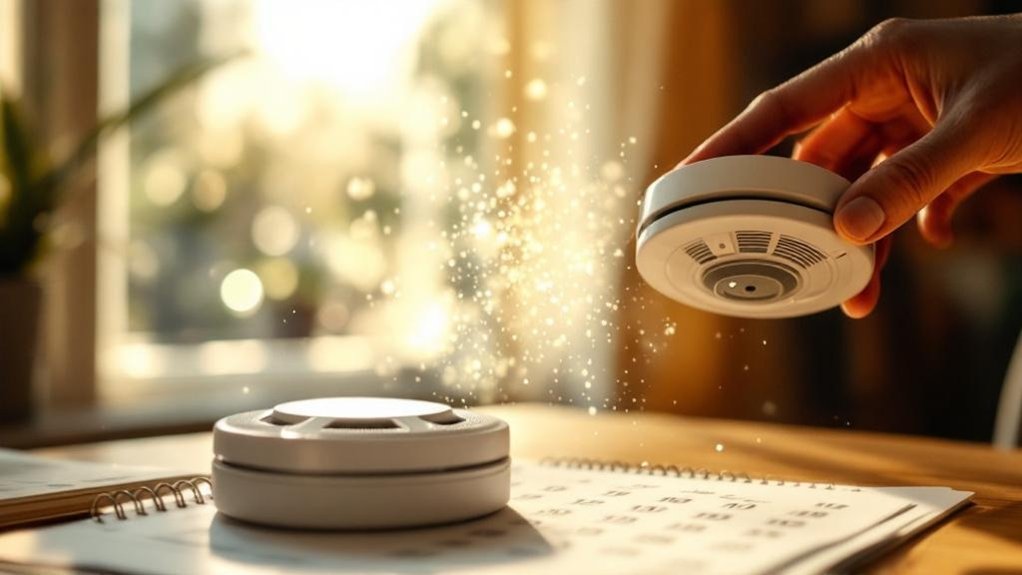
When planning for your home’s safety, establishing a detailed detector replacement schedule guarantees continuous protection without gaps in coverage. We recommend replacing all smoke detectors simultaneously every 8-10 years to maintain consistent sensitivity levels throughout your home.
For effective replacement reminders, coordinate detector replacements with annual events like New Year’s Day or seasonal maintenance routines. Remember that carbon monoxide detectors have a shorter 5-year lifespan and should be tracked separately. For convenience, consider placing your smoke detectors at the curb during trash collection hours between 6 am and 6 pm when disposing of old units.
Document manufacture dates for each unit rather than installation dates for accurate replacement timing. Set up monthly testing protocols, annual battery replacements, and regular cleaning to maximize detector performance between replacements. Create a thorough maintenance log to track testing dates, battery changes, and planned replacements—ensuring your family stays protected year-round.
Frequently Asked Questions
Can Electricians Install Smoke Detectors During Other Electrical Work?
Yes, we can definitely install smoke detectors during other electrical projects. We’ll integrate smoke detector installation with existing work, ensuring electrical safety while maximizing efficiency and minimizing disruption to your home.
Are Smart Smoke Detectors Worth the Extra Cost?
We believe smart smoke detectors are worth the investment. Their advanced safety features and smart technology offer remote alerts and interconnected protection, providing peace of mind that traditional alarms can’t match for your home.
Should I Replace All Detectors at Once Even if Installed Separately?
Yes, we recommend replacing all smoke detectors at once regardless of when they were installed. This synchronizes detector lifespan across all installation locations, ensuring consistent protection and simplifying maintenance for your entire home.
How Do Power Outages Affect Hardwired Smoke Detector Functionality?
Power outages affect hardwired smoke detectors by triggering backup battery operation. We’ve seen how repeated outages can deplete these batteries faster, compromising your system’s reliability when you need it most.
Can Extreme Temperatures Damage Smoke Detectors in Attics or Garages?
Yes, we’ve found that temperature extremes in attics and garages considerably damage smoke detectors. Excessive heat or cold impairs sensors, accelerates component deterioration, and dramatically shortens detector lifespan beyond manufacturer expectations.
Conclusion
We’ve seen how proper smoke detector replacement is essential for home safety. By following the 10-year rule, watching for warning signs, and maintaining a regular testing schedule, you’ll guarantee your family stays protected. Don’t wait for devices to fail—proactively replace them according to manufacturer guidelines. Remember, your detectors’ effectiveness directly impacts your response time during emergencies. Trust Pride Electric to help safeguard your home.
