
To avoid electrical hazards in the kitchen, we’ll need to regularly inspect power cords for damage, avoid overloading outlets, and unplug appliances when not in use. We should maintain proper ventilation, keep cooking surfaces clean, and never leave electric ranges unattended. Installing GFCI outlets in water-prone areas and developing an emergency response plan are essential safety steps. Implementing these practices dramatically reduces fire risks and potential property damage.
Key Takeaways
- Never leave cooking appliances unattended, as this accounts for 37% of home fire ignitions.
- Inspect power cords regularly for fraying and damage, and unplug appliances when not in use.
- Avoid overloading outlets with multiple high-wattage devices on the same circuit.
- Install GFCI outlets in water-prone kitchen areas and test them monthly.
- Keep cooking surfaces clean and free of grease buildup to prevent fire hazards.
Understanding Electric Range Fire Risks
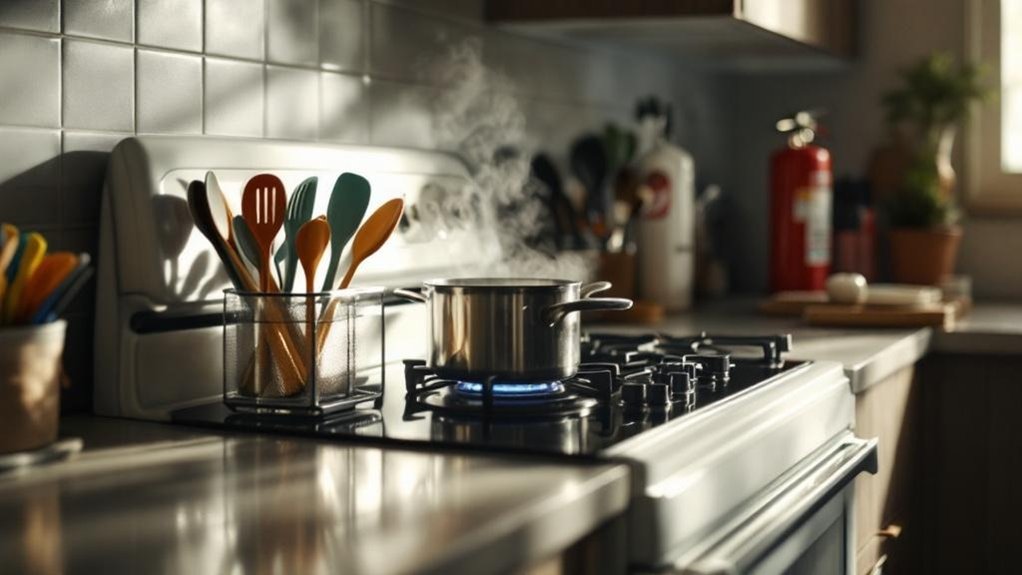
While electric ranges provide convenient cooking solutions for many households, they present significant fire hazards that require our attention. The fire statistics are concerning: electric ranges account for roughly 80% of cooktop fires and are involved in nearly half of all home cooking structure fires.
We’re all at higher risk with electric ranges, which cause 2.5 times more fires than gas ranges—1,165 versus 445 fires per million households. What’s more alarming is that injury rates are nearly 5 times higher with electric ranges. The most common triggers include unattended cooking, frying activities, and the lingering heat of coil elements after they’re turned off. These cooking hazards are compounded when oil reaches ignition temperature or when overloaded circuits strain your home’s electrical system. Electric range fires contribute to approximately $1,248 million in annual property damage, a figure that has increased over 30% since 2012.
Essential Kitchen Appliance Safety Tips
We’ll now address two critical aspects of kitchen electrical safety that prevent common hazards. Proper cord maintenance includes regular inspection for fraying, keeping cords away from heat sources, and immediate replacement of damaged power cords. GFCI-protected outlets should be installed near water sources, appliances should be unplugged when not in use, and overloading outlets with multiple high-wattage devices must be avoided to maintain outlet safety. Preventing electrical hazards is crucial considering that cooking equipment causes 44% of home fires and poses significant risks when improperly maintained.
Cord Maintenance Matters
Maintaining electrical cords in your kitchen isn’t just about organization—it’s an essential safety practice that prevents potentially life-threatening hazards. At Pride Electric, we recommend inspecting all power cords before each use, looking for fraying, cracks, or exposed wires that can lead to shorts and fires. It’s crucial to have a professional electrician repair any damaged cords rather than attempting repairs yourself.
Always unplug appliances by grasping the plug rather than yanking the cord, which damages internal wiring and reduces cord longevity. Store cords properly—avoid tangles, knots, and placement under rugs or furniture. Never attempt DIY repairs on damaged cords with tape; replacement is the only safe option.
Regular electrical inspections help identify potential dangers before they become serious. Remember that extension cords should be temporary solutions only, never substitutes for proper wiring in your kitchen.
Outlet Safety Protocol
Because electricity and water create a dangerous combination, proper outlet safety protocol forms the foundation of kitchen electrical safety. We recommend installing GFCI compliance outlets near sinks and countertops as mandated by NEC regulations. These outlets detect ground faults and cut power quickly, preventing potential shocks in wet environments.
All 15-amp and 20-amp kitchen receptacles should be tamper resistant outlets with built-in shutters that block foreign objects. Verify your outlets are properly spaced—no point on your countertop should be more than 24 inches from an outlet. For islands, install pop-up or flush-mounted outlets rather than side-mounted ones.
Remember to test GFCI functionality monthly and verify that dedicated circuits support major appliances to prevent overloads. When distributing your kitchen electrical load, ensure you’re evenly balancing circuits to prevent dangerous overheating and potential fire hazards. These measures greatly reduce electrical hazards in your kitchen.
Proper Maintenance of Electrical Cooking Equipment
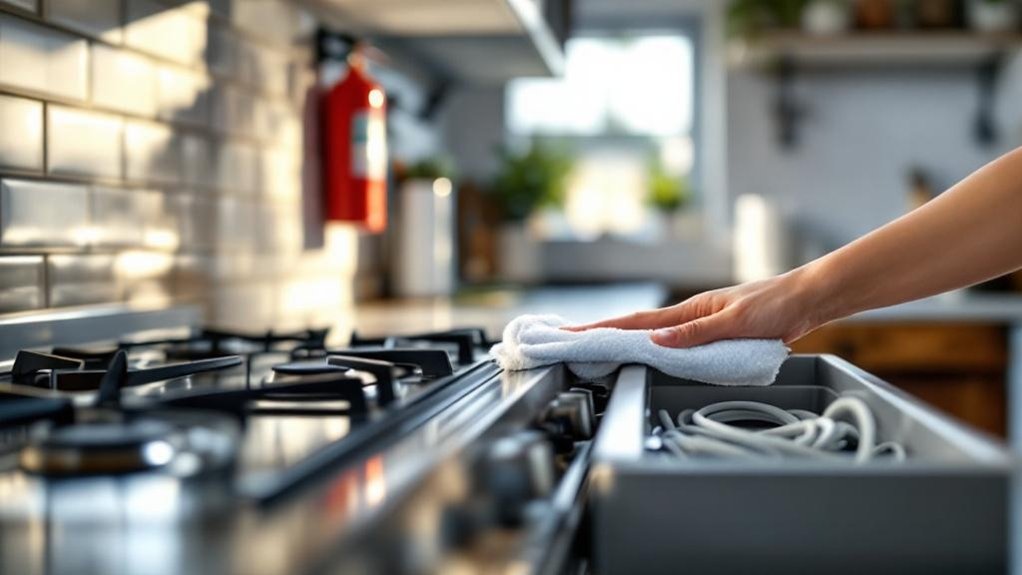
Regular maintenance of electrical cooking equipment stands as a critical safety practice for every kitchen. At Pride Electric, we recommend establishing consistent equipment inspections and maintenance schedules that include thorough cleaning of interior surfaces to remove grease and debris that create fire hazards.
Inspect power cords monthly for fraying or damage, and never use appliances with compromised electrical connections. We’ve seen how neglected thermostat calibration can lead to dangerous overheating situations. This preventative approach helps identify minor issues before they develop into major problems that could pose serious electrical hazards. Remember to lubricate mechanical parts according to manufacturer guidelines while ensuring all temperature controls function properly.
For ideal safety, we suggest cleaning control panels regularly, verifying that ventilation systems remain unobstructed, and immediately addressing any operational inconsistencies. These practices don’t just extend appliance life—they protect your family from preventable electrical accidents.
Safe Cooking Practices to Prevent Electrical Fires
We’ll never leave cooking appliances unattended, as this remains the leading cause of kitchen electrical fires. When using electric ranges or cooktops, we must control heat settings appropriately to prevent overheating that can ignite nearby materials. Strategic positioning of all electrical cooking appliances away from water sources, flammable items, and with proper clearance for ventilation greatly reduces fire risks. Having a working smoke alarm nearby is crucial, as it reduces the risk of dying in a fire by 55% and provides early warning of potential electrical hazards.
Never Leave Cooking Unattended
While seemingly innocuous, leaving cooking appliances unattended represents one of the most dangerous practices in kitchen electrical safety. Statistics reveal that unattended cooking accounts for 37% of home fire ignitions, with electric ranges posing particularly high risks in our community. Nearly one cooking-related fire occurs every three minutes in the U.S.
To protect your home, we recommend implementing consistent monitoring techniques. Set timers whenever you cook, even for brief periods, and avoid cooking distractions like phone calls or television that pull your attention away. Keep your cooking surfaces clean and free of grease buildup that can quickly ignite.
At Pride Electric, we’ve seen too many preventable kitchen fires. Remember that most cooking fires start small but escalate rapidly when left unattended—taking just seconds to transform from a minor incident into a devastating emergency.
Control Heat Properly
Proper heat control stands as the cornerstone of electrical fire prevention in your kitchen. We recommend using electric ranges with temperature limiting controls that automatically restrict maximum heat output. These heat monitoring systems prevent stovetops from reaching dangerous temperatures that could ignite oils and grease.
Temperature regulation isn’t just about safety features—it’s about cooking habits too. Avoid extended high-temperature cooking, which greatly increases fire risks. When using electric cooktops, we suggest selecting appliances with built-in sensors that shut off when unsafe temperatures are detected. Electric stoves are frequently involved in residential electrical fire incidents.
Remember that proper ventilation works hand-in-hand with heat control. Your range hood removes excess heat and fumes that could otherwise accumulate and create hazardous conditions. We encourage regular cleaning of all cooking surfaces to remove flammable residue that can ignite when exposed to high temperatures.
Position Appliances Strategically
Strategic placement of kitchen appliances serves as a critical defense against electrical fires and safety hazards. At Pride Electric, we recommend following manufacturer guidelines for proper clearance and ventilation to prevent overheating.
Ensure you allocate adequate landing spaces—at least 15 inches beside ovens and 12-15 inches around cooktops. Workflow optimization through a well-designed work triangle keeps cooking zones efficient while reducing accident risks.
Don’t overlook door swing clearances, which prevent obstructions and traffic hazards when appliances are in use. Position your electrical outlets strategically, using dedicated circuits for high-powered cooking appliances and ensuring GFCI protection near wet areas.
Keep heat-generating appliances like ovens at a safe distance from refrigerators to avoid efficiency problems caused by heat conflicts and increased energy consumption.
Proper appliance placement not only enhances kitchen functionality but also appreciably reduces electrical fire risks—a safety investment that protects your home and family.
Managing Cords and Outlets in Your Kitchen
The kitchen environment demands careful attention to cord and outlet management to mitigate electrical hazards. Proper cord organization prevents dangerous situations such as tripping hazards, insulation damage, and potential short circuits. Never run cords under rugs or through high-traffic areas, and keep them away from heat sources and water. Since 58% of electrical fires start in kitchens, proper cord management is especially critical in this high-risk area.
For outlet accessibility, distribute appliance usage across different circuits to balance electrical load. Avoid plugging multiple high-wattage appliances into a single outlet or power strip. Install GFCI outlets in areas where water exposure is likely, and test them monthly. Regularly inspect all outlets for discoloration, heat buildup, or damage.
We recommend scheduling routine electrical safety checks with licensed professionals like our team at Pride Electric to guarantee your kitchen remains safe.
Creating an Emergency Response Plan
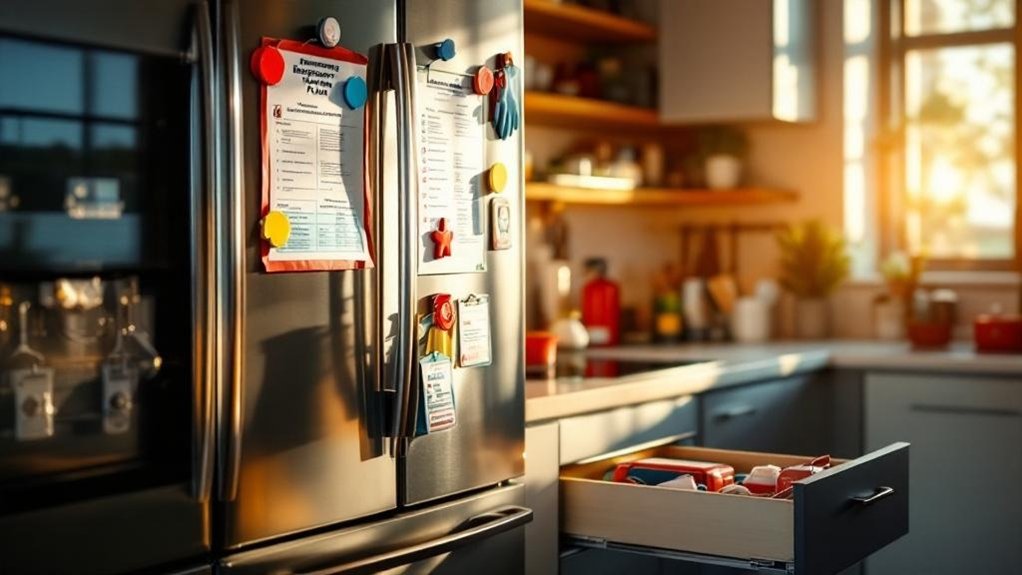
Beyond managing cords and outlets, having a clear plan for handling electrical emergencies in your kitchen is essential for household safety. At Pride Electric, we recommend creating a thorough response strategy that includes:
- Identifying potential hazards like overloaded circuits or water near appliances
- Listing emergency contacts including your local fire department and utility company
- Establishing clear evacuation routes from your kitchen
- Assigning specific response roles to family members
- Maintaining accessible fire extinguishers and safety equipment
Regular emergency drills help guarantee everyone knows what to do during an electrical incident. Practice these procedures quarterly so reactions become automatic. Implementing regular risk assessments will help you identify new potential hazards before they cause problems. Remember to review and update your plan annually, especially after kitchen remodels or when new appliances are installed.
This preparation gives you peace of mind and protects what matters most—your family and home.
Smart Kitchen Upgrades for Enhanced Safety
Modern kitchens equipped with smart technology offer unprecedented safety advantages while revolutionizing how we interact with our cooking spaces. At Pride Electric, we’re seeing smart appliance trends that integrate AI-powered monitoring systems capable of detecting electrical anomalies before they become hazards.
IoT benefits extend beyond convenience—smart refrigerators maintain ideal temperatures, while intelligent ranges include over/under voltage protection to prevent electrical overloads. These features not only enhance safety but improve energy efficiency. More than 51% of foodservice businesses have adopted high-efficiency equipment that reduces circuit overload risks. Approximately 37% of commercial kitchens now utilize IoT-enabled appliances that provide continuous monitoring of electrical systems.
When upgrading your kitchen, look for appliances with third-party safety certifications. The integration with home energy management systems helps detect electrical faults early, while automated alerts notify you of maintenance needs before problems escalate into dangerous situations.
Seasonal Safety Checks for Kitchen Electrical Systems

Conducting regular seasonal safety checks of your kitchen’s electrical systems provides essential protection against potential hazards that evolve throughout the year. At Pride Electric, we recommend quarterly inspections of all kitchen wiring, outlets, and appliance cords for fraying, discoloration, or damage.
Monthly GFCI testing is vital—simply press the test button to verify proper function. Inspect your electrical panel for signs of damage including burnt marks, which could indicate serious issues requiring immediate attention. During seasonal inspections, test smoke and carbon monoxide detectors, replacing batteries at least annually. Vacuum refrigerator coils quarterly to prevent fire hazards from dust accumulation.
Remember to document your findings during each seasonal check, creating a safety maintenance record. For any concerns about overheating, unusual odors, or damaged components discovered during your inspections, please contact our licensed professionals rather than attempting DIY electrical repairs that could compromise your family’s safety.
Frequently Asked Questions
Can I Use Water to Extinguish an Electrical Fire?
No, never use water on electrical fires. We recommend using Class C fire extinguishers to protect our kitchens from these hazards. Water conducts electricity, creating deadly fire safety risks for all of us.
How Often Should Kitchen GFCI Outlets Be Tested?
We recommend testing your kitchen GFCI outlets monthly. This regular GFCI maintenance guarantees they’ll properly protect you from shock hazards. After electrical storms, conduct additional outlet testing for peak safety.
Are Smart Appliances Less Prone to Causing Electrical Fires?
We can’t say smart appliances are less fire-prone. While they offer electrical fire prevention through IoT monitoring, they introduce new risks like hacking vulnerabilities and complex electronics that require proper installation for smart appliance safety.
What’s the Safest Way to Clean Electric Stovetop Coils?
We recommend disconnecting power first, then using mild soap and water for stovetop cleaning. Never submerge electrical components. For stubborn residue, apply baking soda paste during coil maintenance. Always let coils cool completely.
How Do Power Surges Affect Kitchen Appliance Safety?
Power surges can damage safety mechanisms in appliances, creating fire hazards. We’ve seen these events markedly reduce appliance lifespan and compromise protective features that prevent electrical accidents in your kitchen.
Conclusion
We’ve covered essential kitchen electrical safety practices that’ll safeguard your home from common hazards. By implementing proper maintenance protocols, managing your appliances correctly, and organizing cords safely, you’ll greatly reduce fire risks. Don’t overlook the importance of GFCIs, dedicated circuits, and regular equipment inspections. Remember, electrical safety isn’t optional—it’s a critical component of your kitchen’s operational integrity and your family’s protection.
