
Georgia’s severe weather patterns have driven a 400% increase in power outages since 2000, making generator installation a critical consideration for homeowners. We recommend standby generators for automatic whole-home coverage or portable options for budget-conscious consumers. Proper sizing, placement, and fuel selection are essential for reliable backup during storms. Installation requires permits ($50-$200) and strict adherence to safety standards, particularly the “20-20-20 rule” for carbon monoxide prevention. The following guide explores your best backup power solution.
Key Takeaways
- Standby generators provide automatic whole-home coverage during Georgia’s increasingly frequent severe weather outages.
- Properly sized generators must match your specific power needs, prioritizing essential loads like refrigeration and medical equipment.
- Fuel options include natural gas, propane, and diesel, with natural gas offering the most cost-effective long-term operation.
- Generators must be installed with proper transfer switches and placed at least one foot from structures with adequate ventilation.
- Professional installation requires permits ($50-$200) and must comply with National Electrical Code regulations for safety.
Understanding Georgia’s Storm Patterns and Power Outage Risks
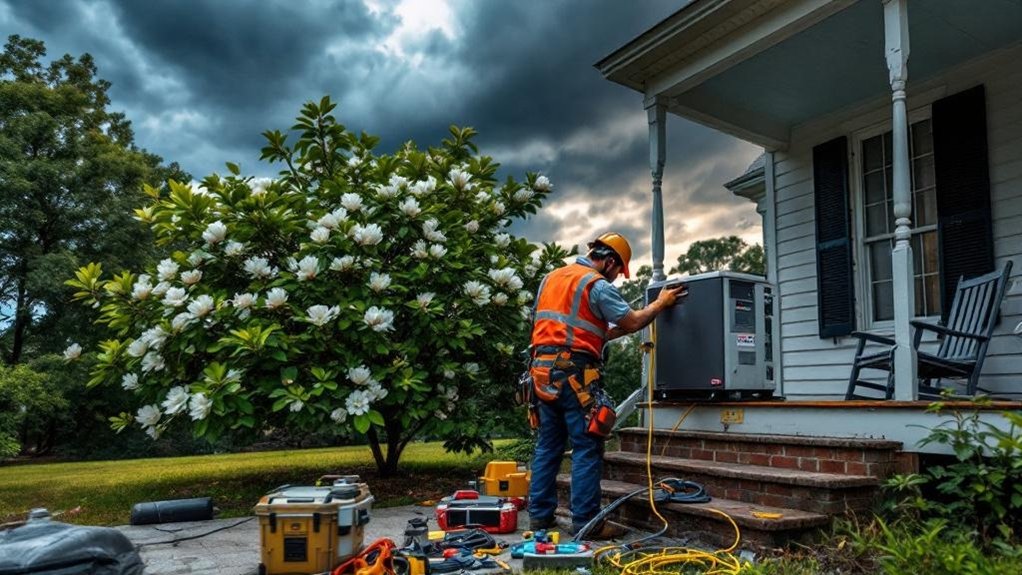
While Georgia’s climate is typically moderate, it’s frequently impacted by severe weather events that can leave residents without power for extended periods. Our state has experienced significant storm-related disruptions, including Hurricane Michael in 2018, with wind gusts reaching 115 mph, and multiple tropical storms causing widespread damage.
From 1980 to 2024, Georgia endured 134 confirmed weather disasters, highlighting our vulnerability to power outages. North Georgia residents, particularly in Canton and surrounding counties, face unique risks due to our regional storm patterns. Effective storm preparedness includes understanding local weather forecasting to anticipate potential outages. With climate trends showing increased extreme weather events, the aging infrastructure in many areas compounds these risks, making backup power solutions increasingly essential for our communities. The severe flooding in September 2009 demonstrated how extreme weather events can cause significant damage and extended power disruptions throughout the state.
Types of Generators Suitable for Georgia Homes
We’ll examine standby generators versus portable options for Georgia homeowners seeking reliable backup power during severe weather events. When selecting a generator, fuel type considerations—including natural gas, propane, and diesel—significantly impact installation requirements and operational reliability during extended outages. Our certified technicians can help determine the appropriate generator size and fuel source based on your specific power needs, home configuration, and local weather patterns. The proximity to your home’s fuel source can significantly reduce connection costs while ensuring optimal generator performance during power outages.
Standby vs. Portable Options
When selecting a generator for your Georgia home, understanding the fundamental differences between standby and portable units is essential for making an informed decision.
Standby generators offer automatic whole-home coverage during outages, with superior generator efficiency for prolonged power disruptions. They require professional installation due to their permanent integration with your electrical system, which presents installation challenges including space requirements and code compliance.
In contrast, portable generators provide flexibility at a fraction of the cost (starting under $500 versus $5,000-$15,000 for standby models). However, they demand manual setup, frequent refueling, and can’t power your entire home simultaneously. Portable models typically produce less power output ranging from 3,000 to 8,500 watts compared to whole-house generators.
We’ve found that homeowners experiencing frequent or extended outages benefit most from standby generators, while those facing occasional short disruptions often discover portable units meet their needs adequately while staying budget-friendly.
Fuel Type Considerations
After determining whether a standby or portable model suits your needs, selecting the right fuel type becomes your next critical decision point. In Georgia’s climate, we recommend evaluating several options based on your specific requirements.
Natural gas and propane offer cleaner emissions impact than traditional fuels, with propane providing excellent portability and widespread availability throughout our service areas. For homeowners prioritizing fuel efficiency, diesel generators deliver superior performance and longer engine life, though with higher maintenance costs. Proper fuel storage considerations significantly impact your generator’s reliability during severe weather events when you need it most.
Consider your home’s existing infrastructure—natural gas lines require professional installation but provide continuous fuel supply during emergencies. If environmental concerns are paramount, propane and natural gas produce fewer pollutants than diesel options.
We can help you navigate these choices to find the perfect balance of reliability, efficiency, and cost-effectiveness for your home’s backup power needs.
Calculating Your Home’s Power Needs During Outages

When calculating your home’s power needs for a backup generator, we first distinguish between essential loads (refrigeration, medical equipment, heating) and comfort loads (entertainment systems, secondary lighting). We’ll need to determine the total wattage requirements by listing each critical appliance and its power consumption, typically found on the manufacturer’s label or specification sheet. Remember that power consumption is measured in kilowatts (kW) with most home appliances requiring between 0.5 to 5 kW depending on their function. Our team at Pride Electric can perform a thorough power assessment to guarantee your generator is properly sized to handle peak demands during outages.
Essential vs. Comfort Loads
The fundamental distinction between essential and comfort loads forms the cornerstone of effective generator sizing for residential backup power systems. When planning your backup power solution, we prioritize essential load prioritization to guarantee critical systems like refrigerators, medical equipment, and security systems remain operational during outages.
While comfort loads—such as TVs, computers, and HVAC systems—enhance living conditions during power disruptions, they’re secondary to life-safety concerns. Our approach to comfort load management involves calculating both continuous and surge wattage requirements, then determining appropriate generator capacity for your specific needs. Incorrect sizing can result in system damage and potentially leave you without power when you need it most.
At Pride Electric, we’ll help you balance power requirements by implementing strategic load segmentation and shedding techniques, guaranteeing your most critical systems receive uninterrupted power while maximizing the efficiency of your backup system.
Calculate Wattage Requirements
Determining your exact power requirements stands as the foundation for selecting an appropriate backup generator. At Pride Electric, we’ll help you identify all essential devices that need power during outages—refrigerators, sump pumps, medical equipment, and basic lighting systems.
To perform an accurate wattage calculation, we add the power consumption of each critical appliance. For example, a refrigerator (700W) plus essential LED lighting (60W) and medical devices creates your baseline need. Remember to account for startup surges, which can be 2-3 times higher than running wattage. Historical data from severe weather events in Georgia can help us plan for worst-case power outage scenarios.
Appliance efficiency greatly impacts your total requirements. Energy-efficient models reduce overall load demands and may allow for a smaller generator. We’ll analyze your specific usage patterns to calculate total watt-hours needed during typical outage scenarios.
Key Location Considerations for Generator Placement
Selecting an ideal location for your generator installation requires careful consideration of multiple factors that directly impact safety, efficiency, and compliance. At Pride Electric, we prioritize dry, elevated environments to prevent water damage while ensuring generator accessibility for maintenance and emergency situations.
Your generator must be positioned away from windows, doors, and vents to prevent carbon monoxide infiltration. We maintain proper clearances from flammable materials and provide adequate ventilation for safe operation. For optimal generator aesthetics and neighborhood harmony, we strategically place units to minimize noise disturbance while complying with local regulations.
We’ll mount your generator on elevated pads with proper grounding systems, complete with weather-resistant enclosures and surge protection. This thorough approach protects your investment while ensuring reliable backup power during Georgia’s unpredictable storms. Our installations account for severe weather impacts that can affect generator functionality, from summer thunderstorms to winter ice storms.
Navigating Permits and Local Code Requirements
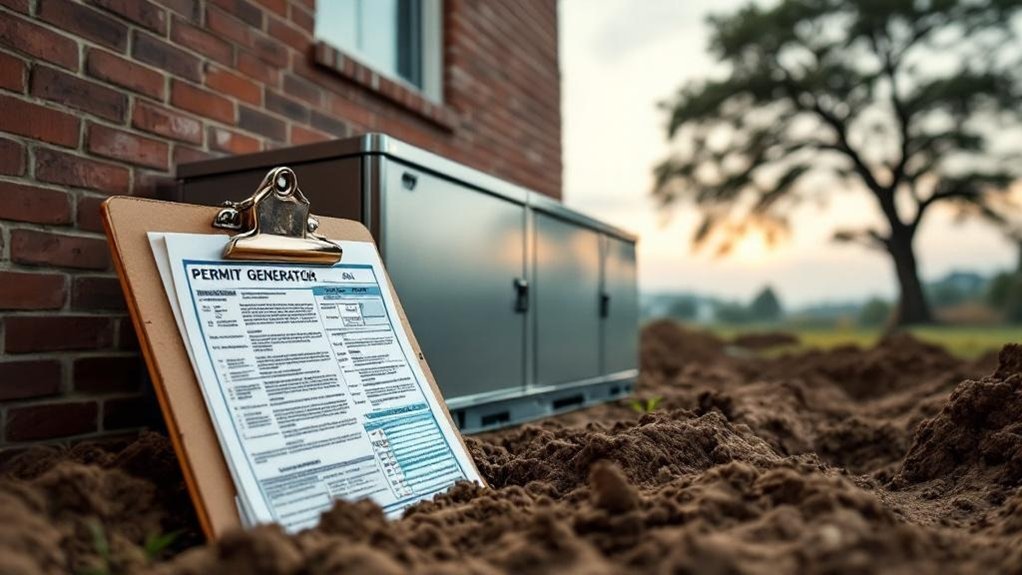
When installing a backup generator at your home or business, proper permitting and code compliance form the foundation of a safe, legal installation. In Georgia, most municipalities require electrical permits for generator installations, with costs typically ranging from $50-$200 depending on complexity.
Your permit application must include site plans, electrical diagrams, and generator specifications. We’re familiar with the submission process to building departments across Canton and surrounding counties we serve. The review period generally takes 5-10 business days before approval.
All installations must comply with the current National Electrical Code (NEC) standards, including proper grounding systems. Don’t overlook additional requirements for gas lines or propane tanks, which may need separate permits. Following approval, local inspections verify compliance with all codes and approved plans—the final step in ensuring your backup power system is ready for Georgia’s unpredictable weather. Additionally, emergency generators must comply with federal air regulations under NSPS Subpart IIII and JJJJ, especially for emissions standards.
Transfer Switch Options and Electrical Integration
The heart of any backup power system lies in its transfer switch, which safely connects your generator to your home’s electrical panel. At Pride Electric, we install several transfer switch types based on your specific needs: manual switches for portable generators, automatic switches for standby systems, and smart switches with remote monitoring capabilities.
We prioritize electrical safety during every installation by positioning transfer switches near the main panel, guaranteeing proper circuit capacity planning, and verifying neutral and ground connections. Our licensed technicians carefully test each system after installation to confirm peak performance.
For Georgia homeowners preparing for storm season, we recommend selecting a weather-resistant transfer switch that’s appropriately sized for your generator’s output capacity. Remember that professional installation guarantees code compliance and reliable operation when you need it most. We also offer service entrance rated transfer switches that incorporate a main breaker for overcurrent protection while simplifying your overall electrical system.
Fuel Options and Supply Planning for Extended Outages
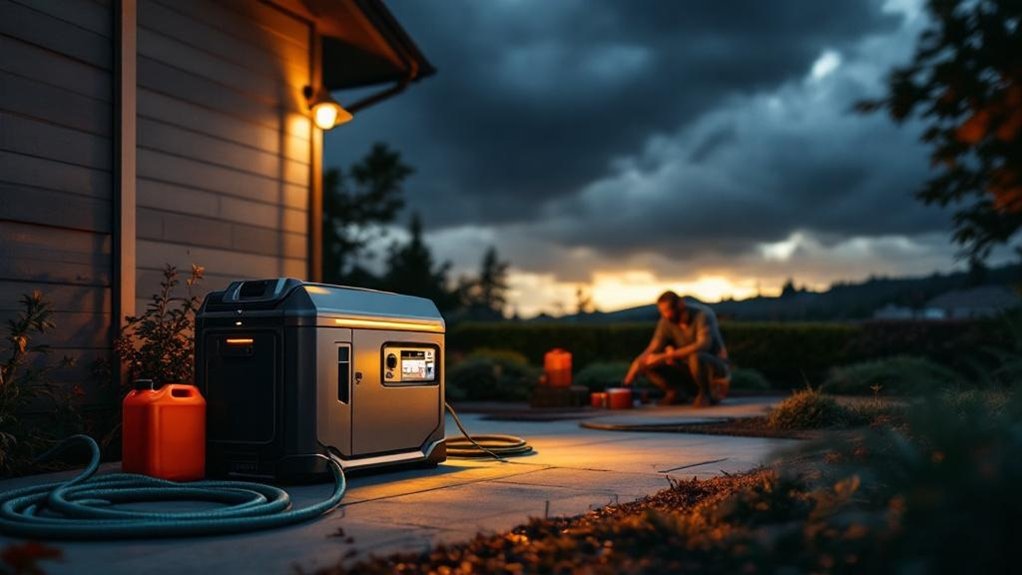
Since power outages can last days or even weeks during severe weather events, your choice of generator fuel becomes a critical factor in maintaining reliable backup power. At Pride Electric, we recommend evaluating several key considerations.
Natural gas and propane offer significant advantages for Georgia homeowners—they provide reliable supply during extended outages, have longer shelf life, and produce fewer emissions than diesel or gasoline options. For proper fuel storage, we’ll help you determine appropriate propane tank sizing or guarantee your natural gas lines are correctly installed. Diesel generators offer excellent fuel efficiency for situations requiring long-term power solutions during extended outages.
When selecting your generator system, we’ll assess your home’s specific needs while planning for emergency refueling scenarios. With propane’s indefinite shelf life and natural gas’s continuous availability through existing infrastructure, you’ll be prepared even when storms knock out power for extended periods.
Safety Measures and Carbon Monoxide Prevention
We emphasize that generator placement at least 20 feet from any building entrance, windows, or vents is critical to prevent deadly carbon monoxide exposure. Working CO detectors should be installed on every level of your home and tested regularly to provide early warning of this invisible threat. Remember that initial symptoms of CO poisoning often mimic flu symptoms, and you should immediately seek fresh air if you experience headaches, dizziness, or nausea during generator operation. Our team at Pride Electric can help guarantee your backup power system adheres to all safety guidelines, protecting your family during power outages.
Proper Generator Placement
When installing a backup generator, proper placement isn’t just a recommendation—it’s a critical safety requirement. At Pride Electric, we follow the “20-20-20 rule” for generator safety: place units at least 20 feet from your home, 20 feet from doors and windows, and 20 inches above ground level.
Your generator must always be installed outdoors on a level surface with proper ventilation to prevent deadly carbon monoxide buildup. We’ll guarantee the exhaust is directed away from living spaces and air conditioning units. Our installation tips include choosing locations that balance accessibility for maintenance with protection from weather elements. Installing battery-powered CO detectors on every level of your home can provide an additional layer of safety when operating a generator during power outages.
As your local Canton experts, we’ll navigate Cherokee County regulations and manufacturer guidelines to create a compliant, safe installation that protects your family during Georgia’s unpredictable storms.
CO Detectors Save Lives
Carbon monoxide (CO) poses a silent but deadly threat during power outages when generators are in use, making CO detectors an essential safety component in every home. At Pride Electric, we’re alarmed that 36% of U.S. adults lack proper CO detection, especially when exposure to levels as low as 200 ppm can cause headaches within hours.
We strongly recommend CO detector installation throughout your home, particularly near sleeping areas and generator locations. These devices greatly reduce CO-related mortality rates, which claimed 399 lives in 2017 alone. For homes with generators, we emphasize compliance with UL 2201 standards requiring automatic shutoffs when CO levels rise. According to recent studies, portable generators are one of the leading causes of unintentional carbon monoxide poisoning in the United States.
Don’t rely on public safety measures—proactive CO poisoning prevention starts with you. Our team can assist with proper placement and installation to protect your family during power outages.
Maintenance Schedule for Storm Season Readiness
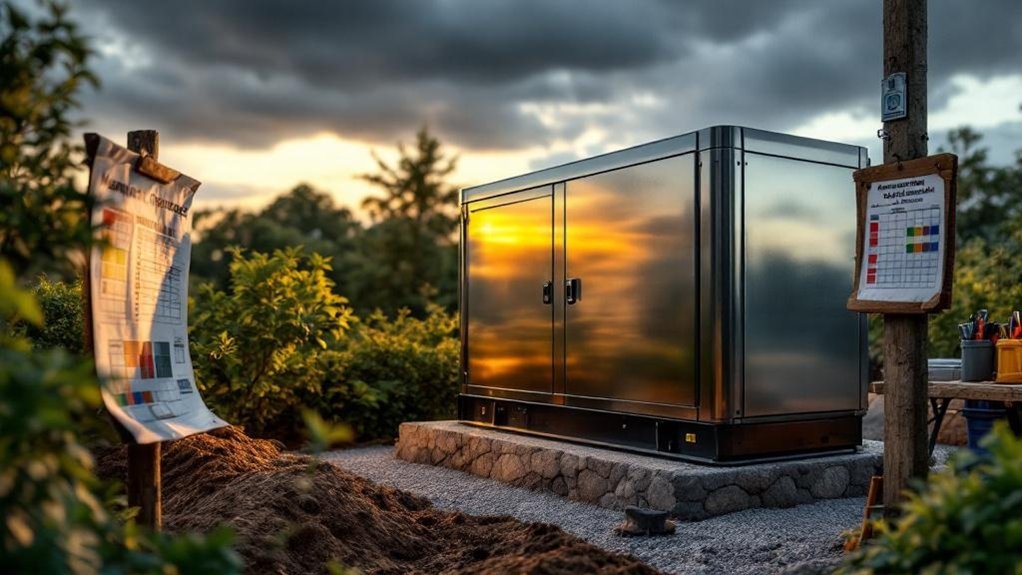
Preparing your generator for storm season demands a systematic approach to maintenance that guarantees reliable backup power when you need it most. At Pride Electric, we recommend a three-phase maintenance schedule to assure generator longevity in Georgia’s challenging climate.
Before storm season, schedule detailed inspections of your generator’s battery, fuel system, and electrical connections. Verify coolant levels and replace oil filters according to manufacturer specifications.
During storms, continuously monitor operation to prevent overheating and manage electrical loads appropriately. Check that the housing remains protected from severe weather elements.
After storms pass, conduct thorough visual inspections, replace any damaged components, and clean the fuel system. This maintenance frequency is critical—especially considering our region’s ice storms, tornadoes, and frequent thunderstorms that can strain both the grid and your backup power system. With power outages increasing by 400% since 2000, proper generator maintenance has become essential for Georgia families.
Cost Analysis: Installation, Operation, and Long-term Value
Understanding the financial implications of generator installation requires a thorough analysis of initial costs, ongoing expenses, and long-term benefits. At Pride Electric, we’ve found that installation budget planning starts with generator type selection—whole-house systems typically range from $6,000-$11,000 installed, while portable units cost considerably less but offer reduced coverage. Installation costs from our competitors start at $12,999 or can be financed monthly.
For Georgia homeowners, operational efficiency considerations are vital. Natural gas generators provide the most cost-effective long-term operation, costing nearly seven times less than other fuel types. While upfront costs might seem substantial—averaging $5,173 for installation alone—the investment delivers measurable returns through home protection, safety during our frequent storms, and increased property appeal. Many of our clients consider generators essential protection against power disruptions common throughout Cherokee County.
Frequently Asked Questions
How Long Does a Typical Generator Installation Take From Start to Finish?
We complete typical generator installations in 2-3 weeks total—with preparation taking 1-2 weeks and physical installation requiring 1-3 days. Various installation factors can affect this installation timeline.
Can Generators Be Installed in HOA Communities With Strict Regulations?
Yes, we can install generators in HOA communities by working with strict regulations. We’ll guarantee compliance with aesthetics requirements and navigate approval processes for your community-appropriate backup power solution.
Will My Generator Work During Flooding Conditions?
We’ll guarantee your generator maintains flood resilience through elevated installation above flood levels. Proper placement and protection of electrical components are critical aspects of generator safety during water events.
How Does Generator Noise Impact My Neighbors During Overnight Operation?
Generator noise can disturb neighbors overnight, potentially breaching noise regulations (52-62 decibels). We recommend using sound-absorbing enclosures, strategic placement, and practicing good neighbor etiquette by communicating before installation.
What Happens to My Generator Warranty if I Perform Maintenance Myself?
Self-performed maintenance typically won’t void your warranty if you follow manufacturer guidelines. We recommend keeping detailed maintenance records to validate warranty coverage should you need service from our team later.
Conclusion
We’ve seen Georgia’s weather challenges firsthand and understand the critical nature of backup power. By selecting appropriately sized generators, complying with local codes, implementing proper placement, and maintaining regular service intervals, you’ll establish resilient emergency power systems. Our technical approach guarantees seamless integration with your home’s electrical infrastructure, delivering immediate response during outages while maintaining fuel efficiency and operational safety throughout Georgia’s unpredictable storm seasons.
