
Whole-house fans provide remarkable benefits, cooling homes 5-10°F instantly while consuming only 200-700 watts compared to AC’s 2,000-5,000 watts. We’ve seen homeowners save 50-90% on cooling costs, paying just 1.8-6.5 cents per hour to operate. They require a dedicated 120V/60Hz circuit with 14-3 wiring and a 15-amp breaker for safe installation. The complete transformation of your indoor air quality and energy profile happens in just minutes.
Key Takeaways
- Whole-house fans reduce cooling costs by 50-90% compared to air conditioners, consuming only 200-700 watts versus 2,000-5,000 watts.
- Fans create immediate cooling of 5-10°F while removing indoor pollutants, allergens, and maintaining healthier humidity levels.
- Installation requires a dedicated 120V circuit with 14-3 two-conductor wiring, protected by a 15-amp breaker.
- Smart controls with temperature sensors, WiFi connectivity, and programmable timers optimize performance and energy efficiency.
- Proper mounting to ceiling joists with acoustic isolators minimizes noise while sealing attic openings prevents air leakage.
How Whole-House Fans Transform Indoor Comfort
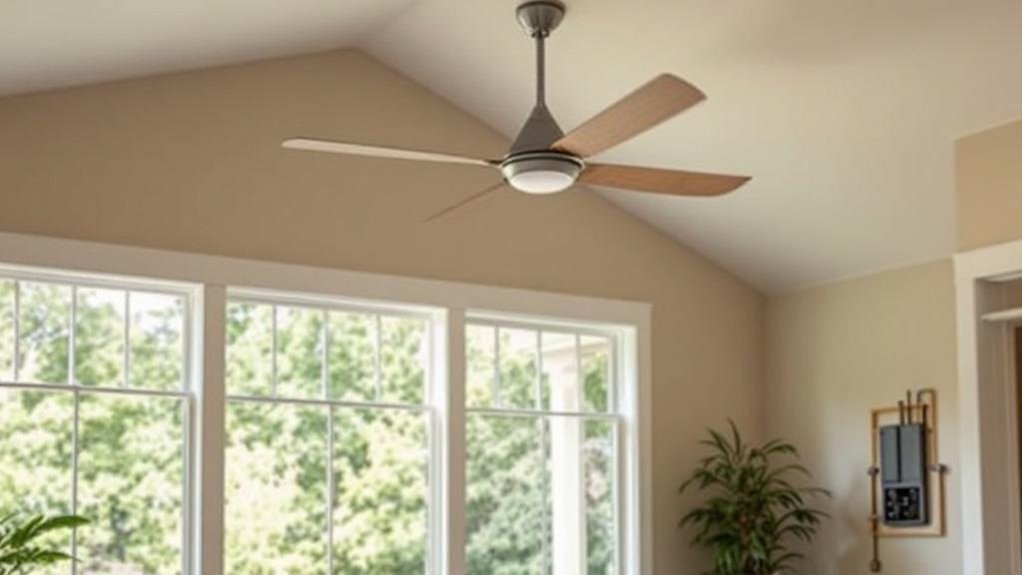
When properly installed by qualified professionals like our team at Pride Electric, whole-house fans create a thorough cooling solution that transforms indoor comfort through multiple mechanisms. These systems produce an instant cooling effect, making your home feel 5-10°F cooler within seconds of activation.
The strategic air circulation creates a natural breeze throughout your living spaces while simultaneously drawing fresh outdoor air in and expelling stale indoor air. This continuous exchange—replacing your home’s entire air volume every 3-4 minutes—delivers significant comfort enhancement beyond temperature regulation. The ventilation system helps prevent structural damage by reducing excess moisture that can accumulate in your home.
Whole-house fans operate quietly compared to traditional AC systems, reducing noise pollution while effectively lowering humidity levels. This all-encompassing approach not only creates a more pleasant environment but also addresses common indoor air quality concerns that impact your family’s overall comfort and wellbeing.
Slashing Energy Bills: The Financial Case for Whole-House Fans
Despite their simple mechanical design, whole-house fans deliver remarkable financial benefits through substantial energy savings compared to traditional cooling systems. At Pride Electric, we’ve seen homeowners reduce their cooling costs by up to 90% when properly utilizing these efficient alternatives. While central air conditioning typically costs $150+ monthly to operate, whole-house fans consume only $5-15 for comparable usage periods.
The whole house benefits extend beyond immediate cost savings. Operating at just 200-700 watts versus the 2,000-5,000 watts of AC systems, these fans use merely 10-15% of the power. These systems are particularly effective when used during evenings when outside air is cooler than the indoor temperature. Real-world examples show families recouping their installation investment within two seasons. In moderate climates like Georgia, where evening temperatures drop, a whole-house fan represents both a practical and economical cooling solution for your home.
Comparing Power Consumption: Fans vs. Air Conditioning

While most homeowners focus on comfort when selecting cooling systems, understanding the stark power consumption differences between whole-house fans and air conditioners reveals a compelling efficiency story. Whole-house fans operate at just 200-600 watts, while central air conditioners demand 2,000-5,000 watts—meaning fans use only 10-20% of the energy an AC requires.
This remarkable fan efficiency translates to substantial savings, potentially reducing cooling costs by 50-90% during peak seasons. We’ve found that implementing strategic cooling strategies, such as running whole-house fans during cooler evening hours and sealing the home during hot days, maximizes comfort while minimizing electricity use. Homeowners also benefit from improved air quality as the system constantly exchanges indoor air with fresh outdoor air. For our Canton neighbors seeking both comfort and conservation, these power consumption facts make whole-house fans an intelligent investment.
Installation Requirements and Electrical Considerations
We recommend installing a dedicated electrical circuit for your whole-house fan to prevent overloading existing home wiring and guarantee safe operation. Proper electrical connections must be sealed to prevent air leakage, while switches should be conveniently located in living areas for easy access. Our licensed electricians at Pride Electric can guarantee your whole-house fan installation meets all local electrical codes with appropriate wiring methods and circuit protection. For optimal control, consider installing multi-speed controls that allow you to adjust airflow based on temperature differences between indoor and outdoor air.
Circuit Demands
Four electrical aspects must be considered when installing a whole-house fan in your home. Most fans operate on standard 120V power with consumption ranging from 250 watts to models drawing up to 10 amps, depending on size and efficiency.
Verify your existing circuit capacity before installation—most whole-house fans can share circuits if load capacity is sufficient, often using standard 15- or 20-amp breakers. Electrical upgrades are rarely needed if proper assessment is done beforehand. A dedicated circuit is typically recommended by professionals to ensure optimal performance and safety.
For proper connection, group matching wires (grounds with grounds, hots with hots, neutrals with neutrals) and secure them with wire nuts inside the junction box. Always connect ground wires to both the fan and metal mounting box for safety.
Remember that fans with higher CFM ratings or additional features may require different electrical configurations to operate efficiently.
Safety Protocols Required
Installing a whole-house fan safely requires adherence to specific protocols that protect both your home and its occupants. At Pride Electric, we guarantee proper mounting to ceiling joists using acoustic isolators to minimize vibration and noise transmission.
Critical safety measures include sealing all openings between the attic and living space, and confirming that combustion appliances have adequate air supply to prevent dangerous back-drafting. We recommend carbon monoxide detectors as an essential safeguard.
Our licensed electricians install dedicated circuits with appropriate gauge wiring and accessible manual controls per code requirements. We’ll also review operational guidelines with you, emphasizing the importance of regular maintenance and proper use conditions. Never operate your fan during combustion appliance malfunctions or smoke events, as this could spread harmful contaminants throughout your home. For proper installation, we carefully select a location between ceiling joists and remove any insulation in the designated area.
Extending Your HVAC System’s Lifespan
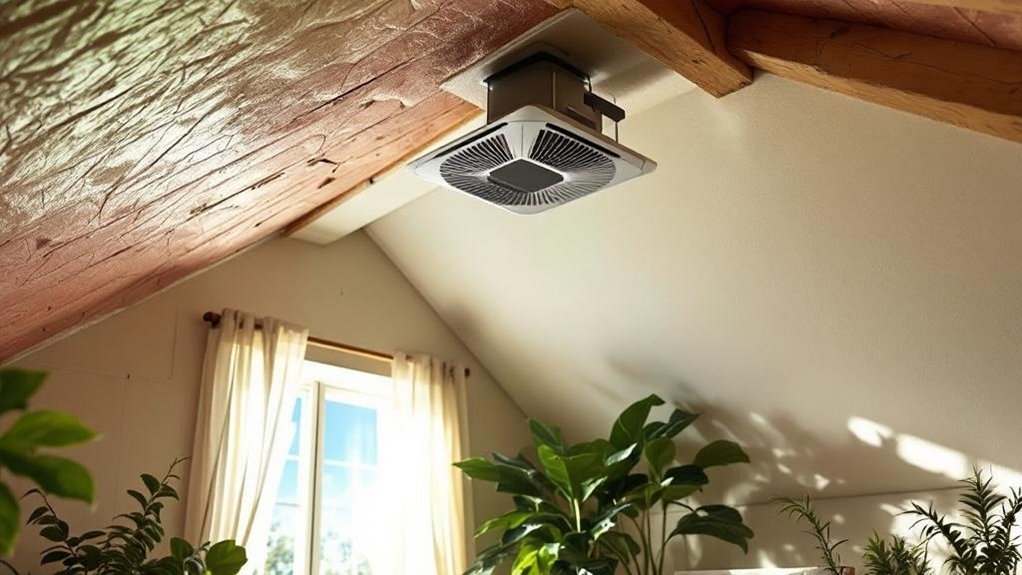
While most homeowners focus primarily on their HVAC system’s immediate performance, understanding the factors that extend its operational lifespan can save thousands in premature replacement costs. At Pride Electric, we’ve seen how whole-house fans contribute considerably to HVAC longevity strategies by reducing overall system runtime.
By implementing proper maintenance tips like twice-yearly professional inspections and regular filter replacements every 1-3 months, you’ll prevent the excessive strain that leads to early component failure. Whole-house fans complement these system maintenance tips by naturally cooling your home during moderate weather, giving your air conditioning system much-needed breaks. Strategic shading of outdoor units can reduce operating temperatures by 10-15 degrees, further protecting your equipment from heat-related stress.
The benefits compound when you consider that reducing operating hours by just 20-30% can extend equipment life proportionally—making whole-house fans not just a comfort upgrade, but a smart investment in your HVAC system’s future.
Creating Healthier Living Spaces Through Improved Air Quality
We’ll examine how whole-house fans greatly reduce indoor pollutants by exchanging stale indoor air with fresh outdoor air up to 60 times per hour. These systems effectively remove harmful VOCs, cooking odors, pet dander, and airborne allergens that typically accumulate in enclosed living spaces. Additionally, the continuous airflow helps regulate humidity levels, preventing mold growth and creating a more comfortable, healthier environment for all household members. The fan achieves this by drawing in fresh air through open windows while simultaneously expelling warm, contaminated air through the attic.
Eliminating Indoor Pollutants
Indoor air quality represents a significant yet often overlooked factor in overall health and wellbeing. At Pride Electric, we recognize that whole-house fans provide powerful pollutant reduction capabilities by continuously expelling contaminated air that contains harmful particulates, allergens, and chemicals.
Many homeowners don’t realize that indoor air often contains higher concentrations of pollutants than outdoor air. These contaminants—including combustion byproducts, VOCs from household products, mold spores, and allergens—contribute to respiratory issues, headaches, and long-term health concerns. With Americans spending approximately 90% of their time indoors, effective ventilation becomes critical for maintaining health. Whole-house fans create a complete air exchange, removing these harmful elements before they accumulate to dangerous levels.
For families with children, elderly members, or those with respiratory sensitivities, this mechanical ventilation solution provides a cost-effective way to maintain healthier indoor air quality throughout your home.
Humidity Control Benefits
Maintaining ideal humidity levels represents a critical yet frequently overlooked aspect of creating healthy indoor environments. At Pride Electric, we’ve seen how whole-house fans serve as effective humidity management strategies by facilitating rapid air exchange, pulling humid indoor air out while introducing fresher outdoor air.
This continuous circulation prevents the stagnant, moisture-rich conditions where mold and mildew thrive, substantially improving indoor air quality. We’ve found these systems particularly beneficial in moderate climates where outdoor humidity remains reasonable. Through powerful ventilation, these systems can reduce relative humidity levels by 5-15% during operation, creating a more comfortable living environment.
While not dehumidifiers per se, whole-house fans complement your existing HVAC system by reducing the overall moisture burden. The resulting environment not only feels more comfortable but supports respiratory health by minimizing allergens and preventing moisture-related structural issues in your home—creating spaces where your family can truly thrive.
Wiring and Circuit Requirements for Safe Operation
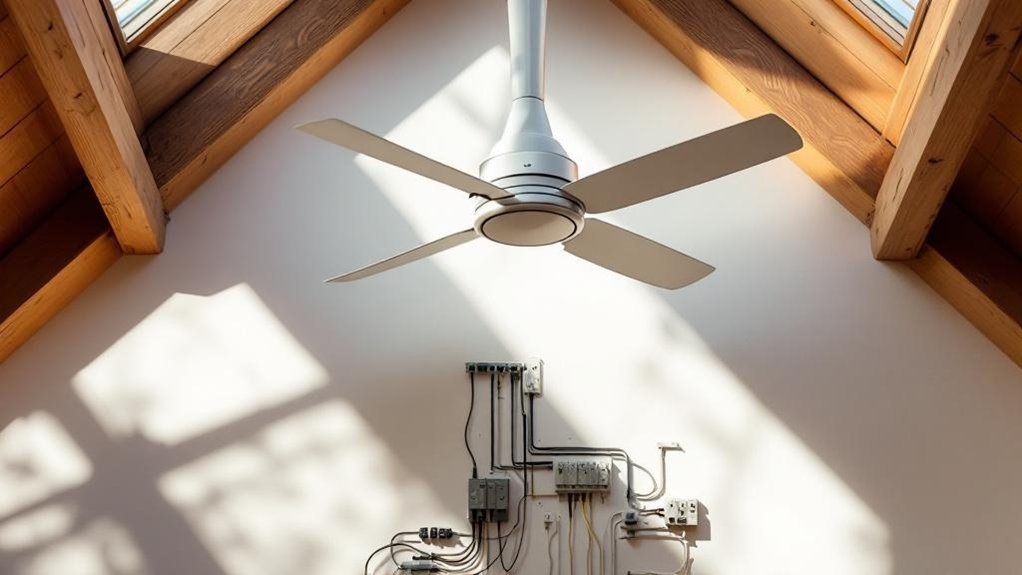
Ensuring proper electrical installation of a whole-house fan is critical for both safety and ideal performance. At Pride Electric, we recommend connecting your fan to a dedicated 120-volt, 60 Hz grounded circuit with 14-3 two-conductor wiring. This circuit should be individually protected by a 15-amp breaker to facilitate safe servicing and seasonal disconnection.
For wiring safety, always connect high speed (black), low speed (red), common (white), and ground wires according to manufacturer specifications. We strongly advise against using extension cords or solid-state speed controls, which can create fire hazards. Instead, install two-speed wall switches with proper grounding.
During circuit installation, position your fan near an attic outlet, supported by solid blocking between joists. Remember to disconnect power at the breaker before any installation work begins.
Reducing Your Home’s Carbon Footprint
We’ve found that whole-house fans consume just 10-15% of the electricity used by typical central air conditioners, reducing your home’s carbon footprint while maintaining comfort. Operating these fans can decrease your energy consumption by up to 90% during cooling periods, translating to significant reductions in greenhouse gas emissions from power generation. This eco-friendly cooling alternative particularly excels in regions with cool nights, where it can provide 15-23 air exchanges hourly while minimizing reliance on energy-intensive air conditioning systems. Homeowners can expect to use approximately 200-500 watts per hour when running a whole-house fan, which is dramatically less than conventional cooling methods.
Electricity Savings Impact
When homeowners switch to whole-house fans from traditional air conditioning systems, they’re making a significant impact on both their utility bills and environmental footprint.
We’ve seen remarkable electricity efficiency with whole-house fans consuming only 200-700 watts compared to central AC systems that draw 2,000-5,000 watts. This translates to operating costs of just 1.8-6.5 cents per hour for a fan versus 67 cents hourly for traditional AC. Many of our customers report cooling cost reductions of 70-80% after installation, with some recouping their investment within two years.
Implementing strategic cooling strategies can maximize these savings. Running your whole-house fan for 8 hours daily might cost just $5-15 monthly, while equivalent AC usage could exceed $150. Annual savings typically range between $187.50 to $237.50 when substituting air conditioning with whole-house fans. These systems create efficient air exchanges—about one per minute—cooling your home without the energy demands of compressor-based systems.
Climate-Friendly Home Cooling
As the global climate crisis intensifies, whole-house fans represent a particularly more sustainable cooling solution than conventional air conditioning systems. These eco-friendly solutions leverage natural airflow principles, drawing cooler outdoor air through your home without energy-intensive refrigeration cycles.
We’re especially impressed by how whole-house fans eliminate hydrofluorocarbon refrigerants entirely, which are significant contributors to ozone depletion. By reducing your reliance on mechanical cooling, you’re actively decreasing carbon emissions from power plants while maintaining comfortable indoor temperatures.
Many homeowners in our community are integrating these fans with renewable energy sources like solar panels, further minimizing environmental impact. The significantly lower energy consumption translates directly to reduced monthly electricity bills while supporting environmental goals. When properly utilized during cooler evenings, these systems maximize cooling efficiency while supporting climate change mitigation efforts. You’ll join countless others embracing sustainable cooling technologies that protect our shared environment.
Optimal Fan Sizing and Electrical Load Planning
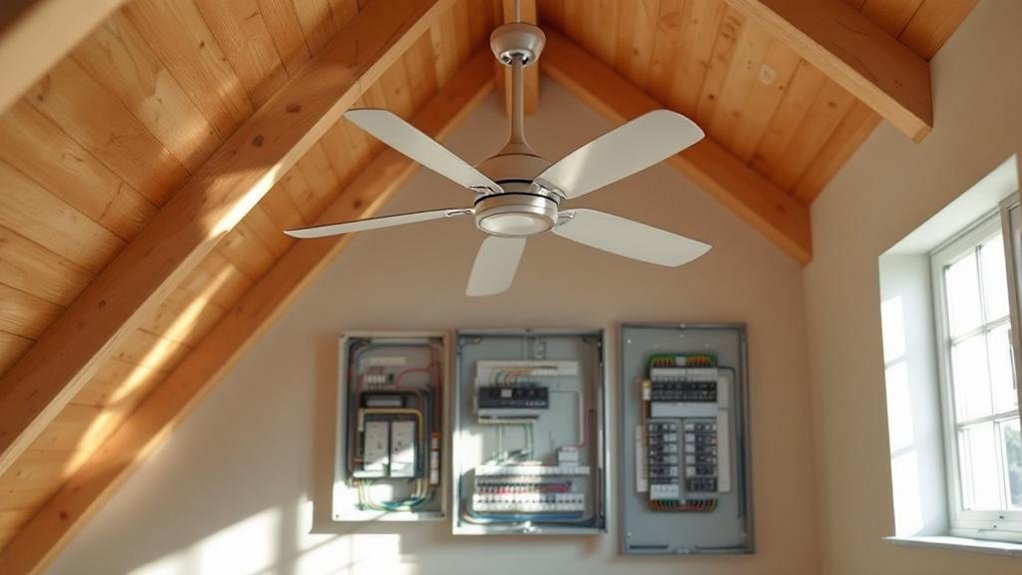
Selecting the right size whole-house fan represents a critical first step in maximizing cooling efficiency while guaranteeing your electrical system can handle the additional load. At Pride Electric, we recommend sizing fans based on your home’s volume—typically 0.2-0.375 times your cubic footage for ideal fan capacity and thermal comfort.
Most installations require dedicated circuits, as these systems draw 120-360 watts during operation with higher startup surges. Properly sized fans that deliver approximately one-quarter CFM of your home’s cubic footage provide optimal cooling without excessive energy consumption. Proper circuit sizing is essential—we assess your existing electrical panel to determine compatibility with installation tips tailored to your home’s specific needs.
Remember that ventilation needs directly impact performance; aim for 1 square foot of attic venting per 750 CFM. Understanding these airflow dynamics guarantees energy efficiency while following residential guidelines that keep your system operating at peak performance.
Smart Controls and Energy-Efficient Operation Strategies
Why settle for basic fan controls when today’s smart technology can dramatically enhance your whole-house fan’s efficiency? At Pride Electric, we implement sophisticated smart automation systems that integrate with your existing smart home setup. Temperature and humidity sensors can trigger your fan automatically when conditions are ideal, while WiFi-enabled controls let you manage operation remotely.
Our solutions include voice control integration with Alexa and Google Home, making adjustments effortless from anywhere in your home. Many of our clients appreciate the energy tracking capabilities that help monitor consumption patterns and identify enhancement opportunities. With programmable timers, multi-speed controls, and automatic safety features, we’ll guarantee your whole-house fan operates at peak efficiency while maintaining your comfort and reducing unnecessary energy use. Our built-in Safety Timer feature provides peace of mind by automatically shutting off your fan in the morning to prevent unnecessary operation.
Frequently Asked Questions
Can Whole-House Fans Work Effectively in Humid Climates?
We find whole-house fans less effective in high humidity levels, functioning most effectively during spring and fall when outside air is drier. They complement A/C systems but won’t match their energy efficiency in humid climates.
Do Whole-House Fans Require Special Attic Ventilation?
Yes, we require enhanced attic ventilation for whole-house fans. Your attic design needs 2-4 times normal ventilation capacity (1 sq.ft per 750 CFM) for proper airflow management to prevent backdrafts and guarantee peak performance.
How Loud Are Whole-House Fans During Operation?
Whole-house fans vary in noise levels from 45-51 dB (whisper-quiet) to noticeably louder, depending on installation quality, fan speed, and sound insulation. We recommend QuietCool models for minimal noise impact during operation.
Can I Install Timers or Automation Systems With My Fan?
Yes, we can install timers and automation systems with your fan. Most whole-house fans work with mechanical timers, while smart switches offer integration with home automation for enhanced control and convenience.
Are Whole-House Fans Safe With Gas Appliances in the Home?
We advise caution with whole-house fans around gas appliances. They can cause backdrafting without proper safety precautions. Always guarantee sufficient ventilation by opening windows when operating to maintain gas appliance compatibility.
Conclusion
We’ve found that whole-house fans deliver exceptional cooling efficiency while requiring proper electrical planning. They need dedicated 20-amp circuits, professional installation of 240V connections, and strategic placement of controls. When properly integrated with your existing HVAC system, these fans optimize airflow while reducing strain on your air conditioner. Contact us for a detailed electrical assessment to guarantee your home’s wiring can safely support this energy-saving investment.
